Meet Emily Kidd
Emily Kidd grew up in West Freeman, Maine, where a small school, a tight-knit community, and the High Peaks landscape shaped the rhythm of daily life. She graduated from Mount Abram High School with a class of 43 and went on to study kinesiology and physical education at the University of Maine, Orono. This summer, she brought that background home in a new way through the Maine Coast Heritage Trust Rockefeller internship.
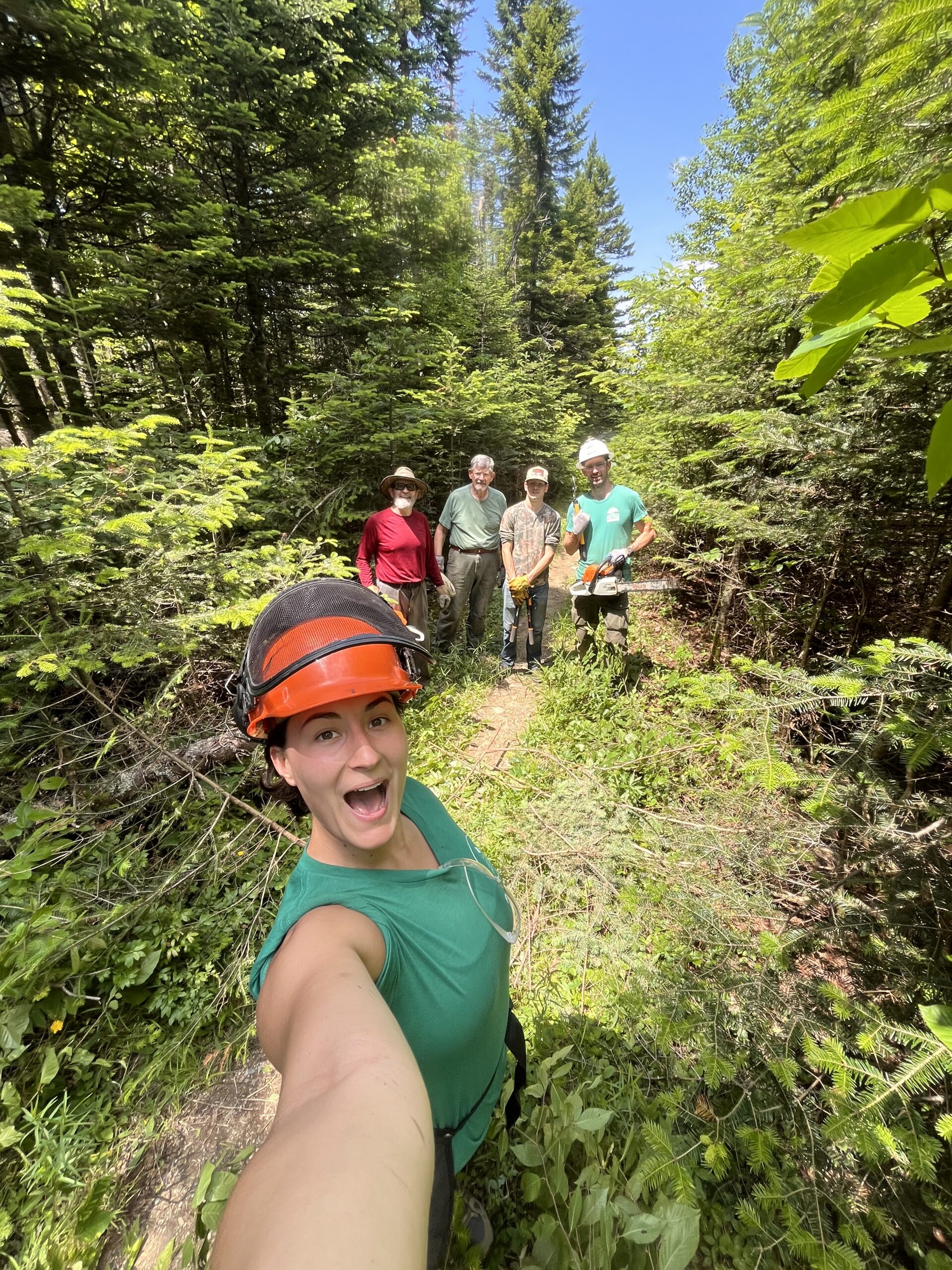
The work gave Emily a chance to see conservation from the inside and from the trail. “Half of my time was spent doing outreach and development,” she said, “and then the other half of my time was spent doing trail work and working for the Recreation Ranger crew.” It was a season of learning by doing, of writing stories one day and helping care for the land the next.
Finding Her Place
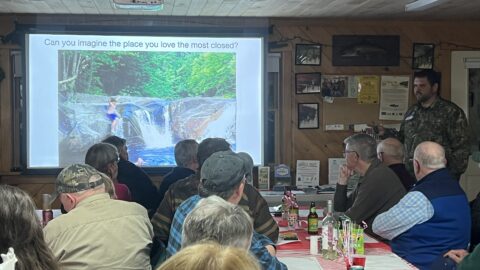
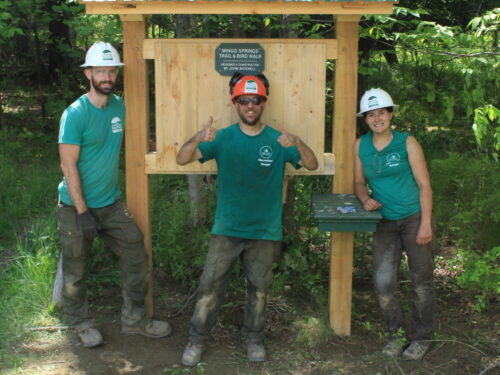
Her first day set an unexpected tone. Emily went straight into the High Peaks Initiative’s Outdoor Summit at the University of Maine Farmington, nervous about entering a room full of people who already knew one another and knew the work well. Instead, she found herself welcomed in.
“Everyone accepted me into that world,” she said. “It made me realize how important it is for young people’s voices to be heard in the conversations that are being had around conservation and in the land trust world.” That sense of belonging stayed with her. It was a reminder that conservation is not only about land. It is also about who gets to speak, who gets to listen, and who gets to help shape the future.
A Day on Saddleback
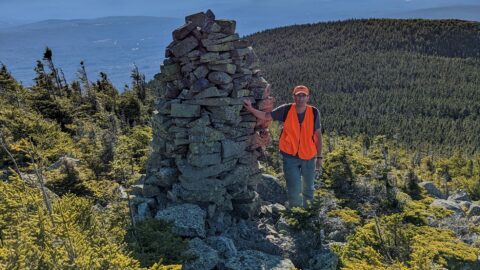
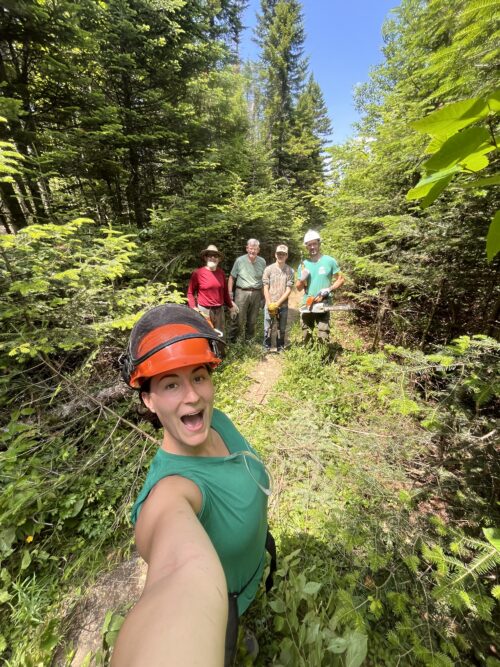
One of Emily’s clearest memories from the summer comes from a trail work day at Saddleback Spur. The crew was small, but the day carried its own kind of energy. There was a board member, a longtime volunteer, and a teenager from Colorado who had come because he was eager to be involved in trail work. By the end of the day, he was already imagining coming back in the future.
“He was just like, ‘Wow, this has been an amazing experience,’” Emily said. “And I want to come back here and work on your trail crew.” For Emily, that moment captured something she will carry with her. Young people are looking for places to belong in the outdoors, and the High Peaks can be one of those places. “There’s a place here for it,” she said, and the region feels richer for it.
Working on trails changed the way Emily sees the landscape she has always known. It gave her a deeper appreciation for what it takes to maintain the places people love and to create new access where it is needed. “This position has given me a deeper appreciation for all that goes into maintaining these resources,” she said, “and the importance of stewarding the resources we have for the stability of community.”
That idea of stability runs through the way she talks about the outdoors. It is not a luxury, she said, but a meaningful part of community life. People need education, food, and housing, but they also need places to step outside, breathe, and enjoy the world around them. “The outdoors is a beautiful place to spend your free time,” Emily said, “and having those spaces for people is really, really important.”
More Than Protection
The summer also changed how she thinks about conservation. Before this internship, the word felt broad and sometimes overly rigid. Now she sees more nuance. “The world of conservation isn’t so black and white,” she said. “The High Peaks Alliance is tackling conservation in a beautiful realm of that gray.” What matters, in her view, is balance. Conserve the land. Make room for people. Do both with care. “It’s really putting the communities and access first,” she said. “The High Peaks Alliance is doing a really great job to protect these natural environments while also ensuring people can experience them.”
Emily also came away with a deeper respect for volunteers and the many hands it takes to steward a trail well. The workdays are productive, but they are also a way of building relationships. “The community building is really important in the volunteer trail work,” she said. “Showing people what it takes to maintain these trails helps them better understand how they can support us in the future.”
She found a similar value in the storytelling side of the internship. Turning a day in the field into a press release, a blog post, or a social post was new to her, but she learned to enjoy the process. “Storytelling is so important in the world of outdoor recreation,” she said. “Getting to incorporate that storytelling into our social media and outreach was really cool.” For Emily, the stories mattered because they helped people see themselves in the work.
By the end of the season, she had gained confidence in ways she did not expect. She had never done much remote work, and she was new to trail work, but she stepped into responsibility and found her footing. “I found myself being so confident and empowered to step into a leadership role on the team,” she said.
What she carries from the summer is both practical and personal. “A deep respect for the work that’s being done,” she said. And also a clearer understanding of conservation as something flexible and humane, rooted in care for both place and people. “It can be a balance between conserving and protecting these places while also allowing for access,” she said. “As long as you’re doing it mindfully, people can still interact with these environments.”
If someone asked how to get involved, Emily would keep it simple. “I would send them to our newsletter,” she said, along with the website and volunteer trail work days. For her, that is where connection begins. One story, one trail day, one person deciding to step in and be part of something lasting.
Thank you, Emily
Thank you, Emily, for sharing your summer with us and for the care, energy, and perspective you brought to the High Peaks. We’re grateful for your work and excited to see where your path leads next.