Learning the Art of Live Staking
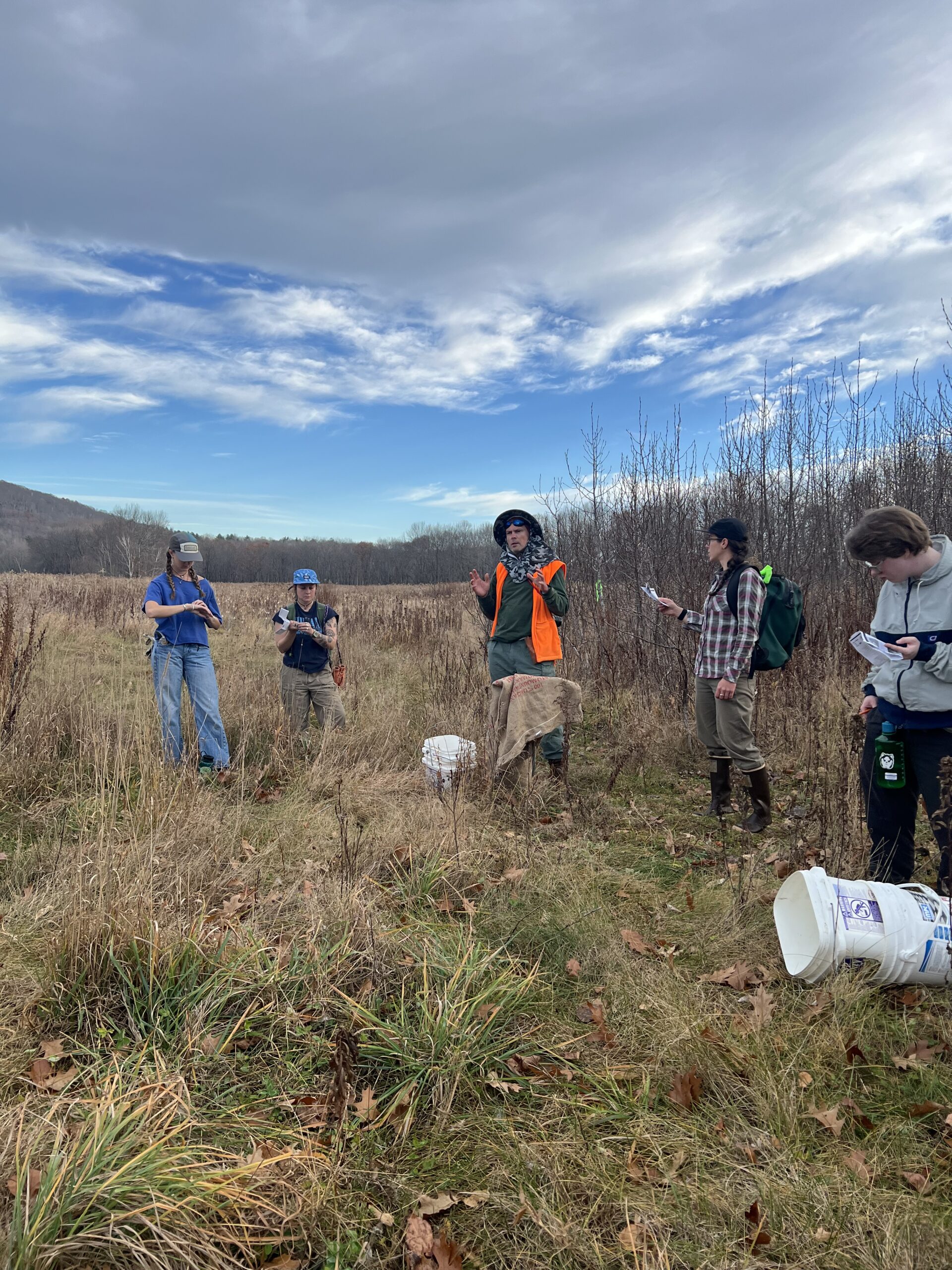
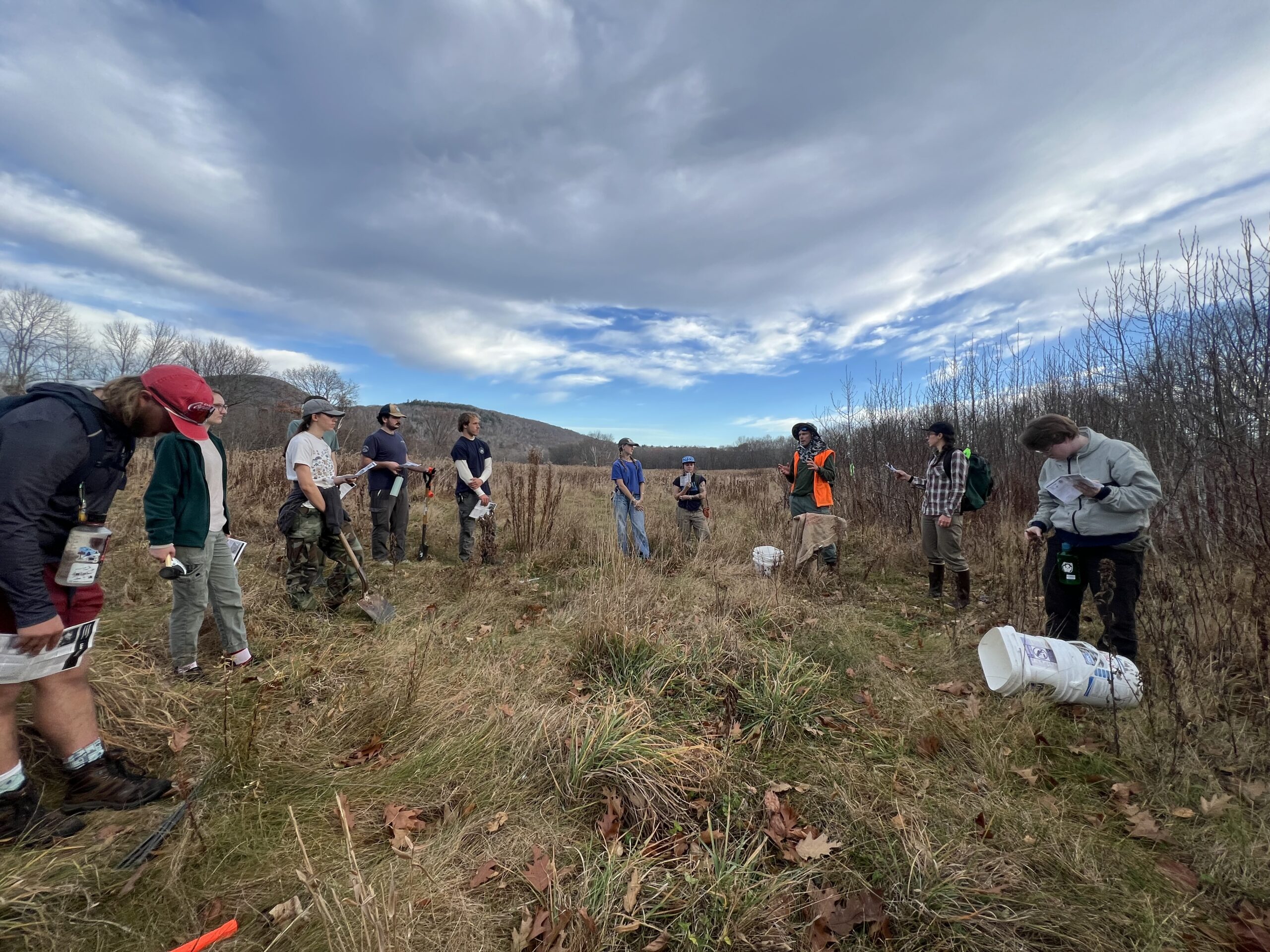
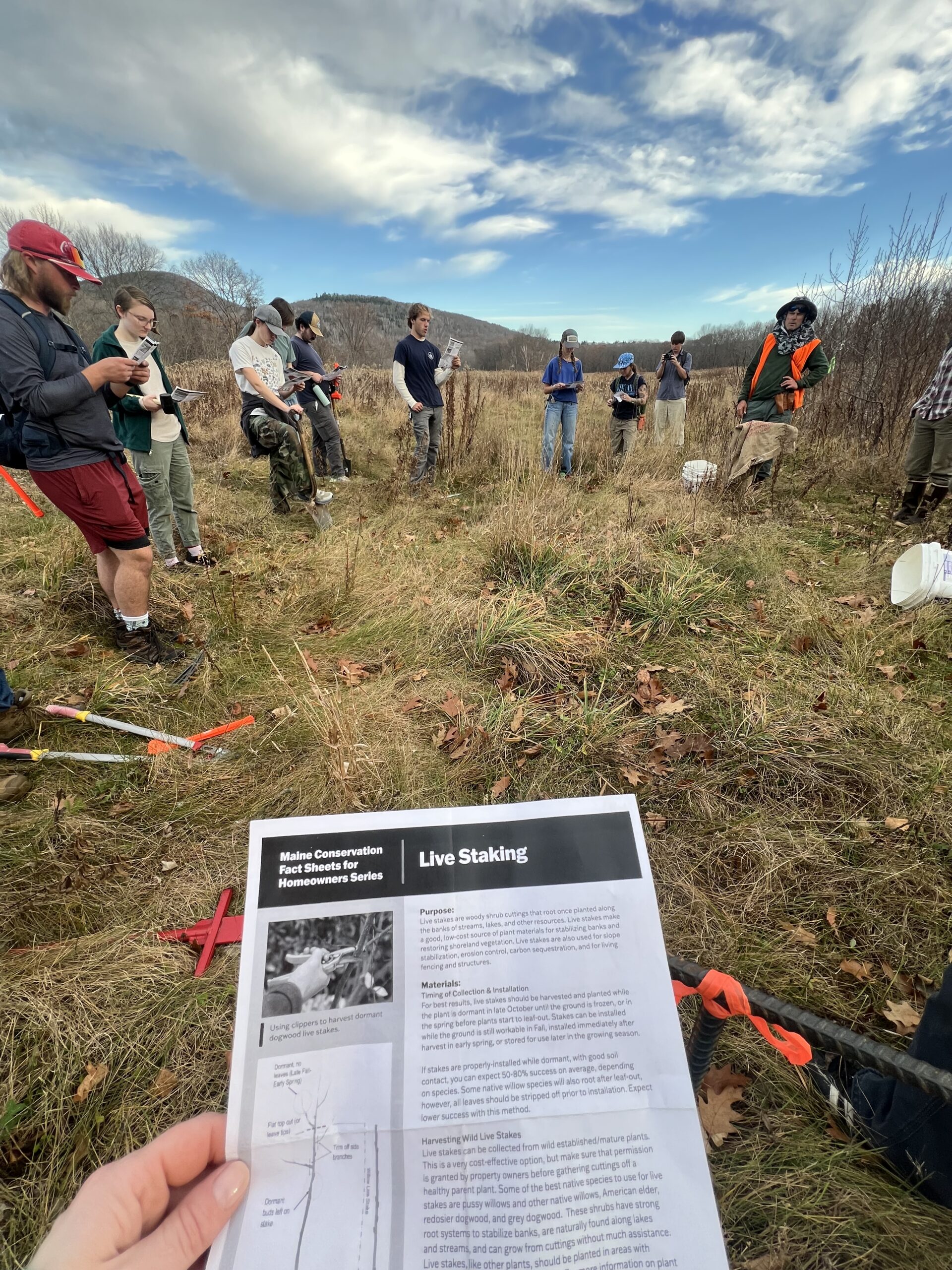
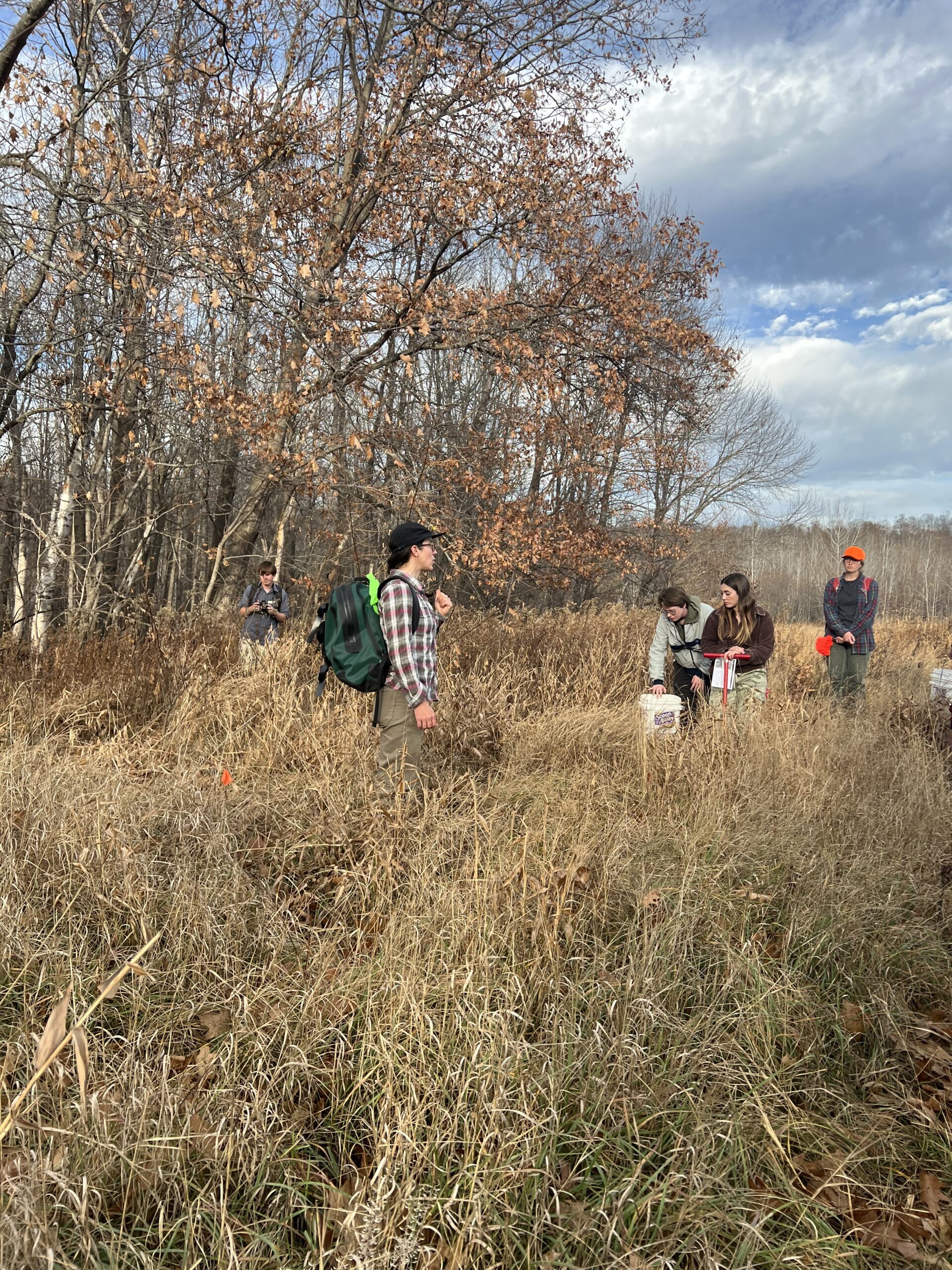
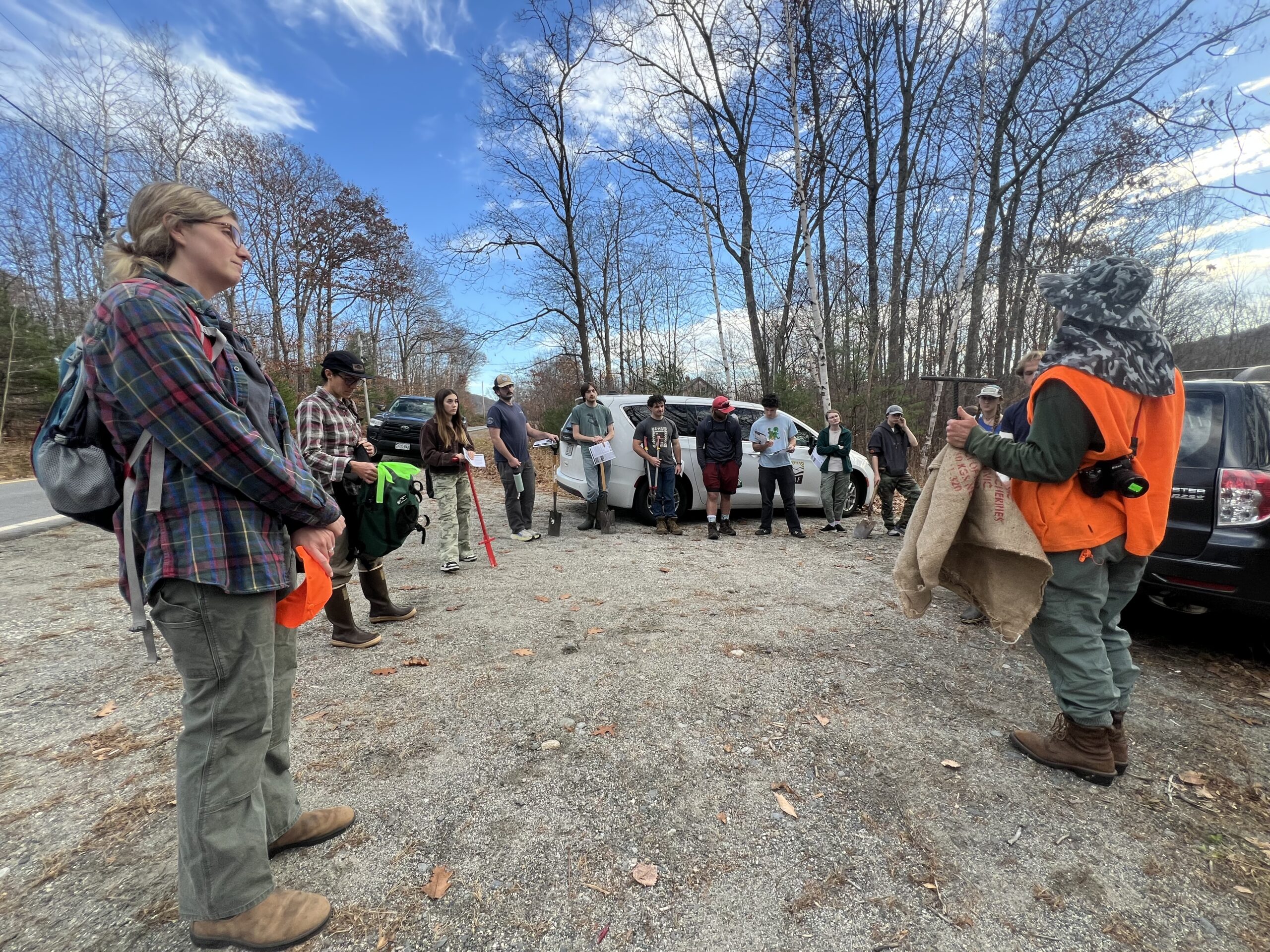
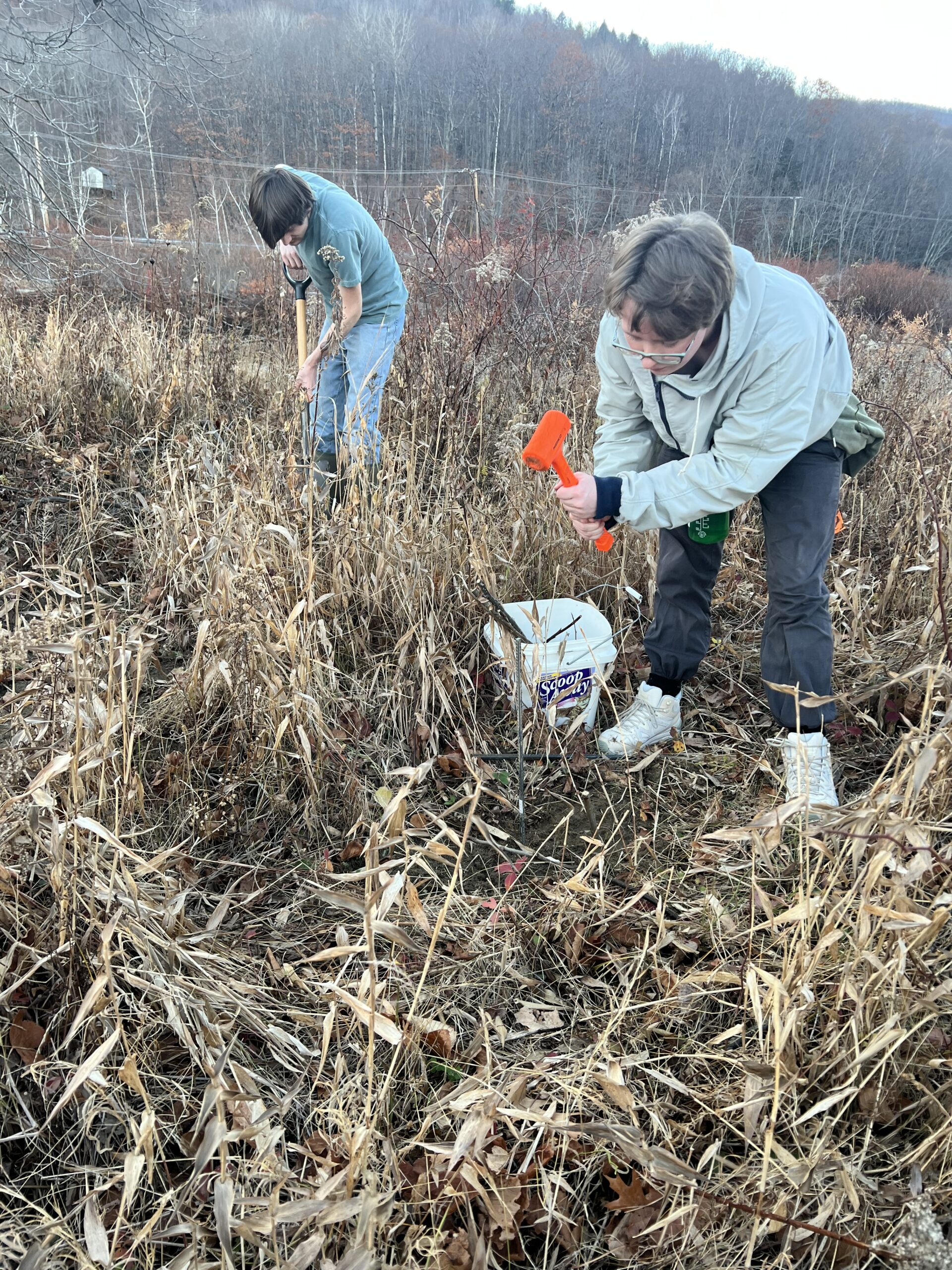
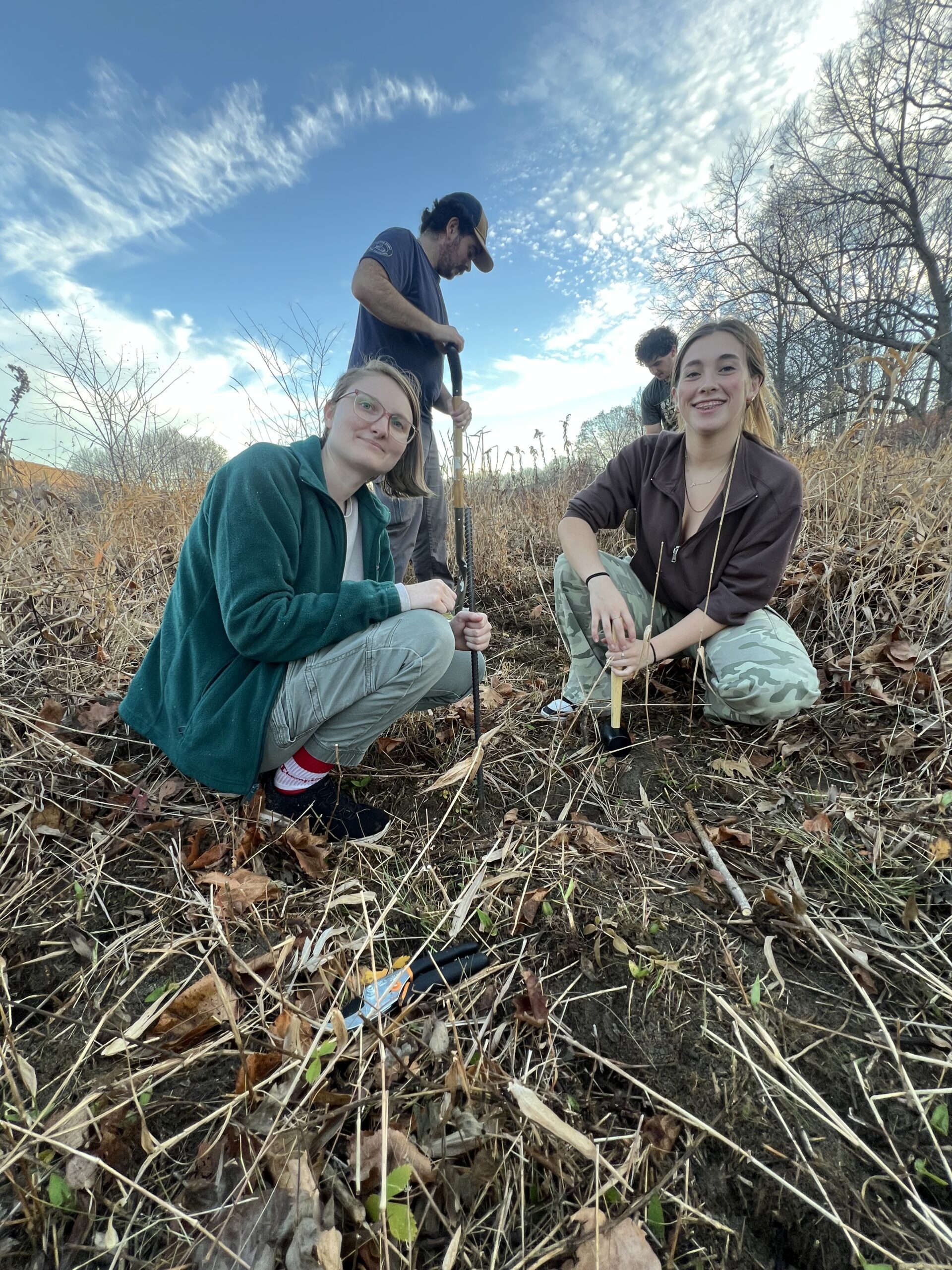
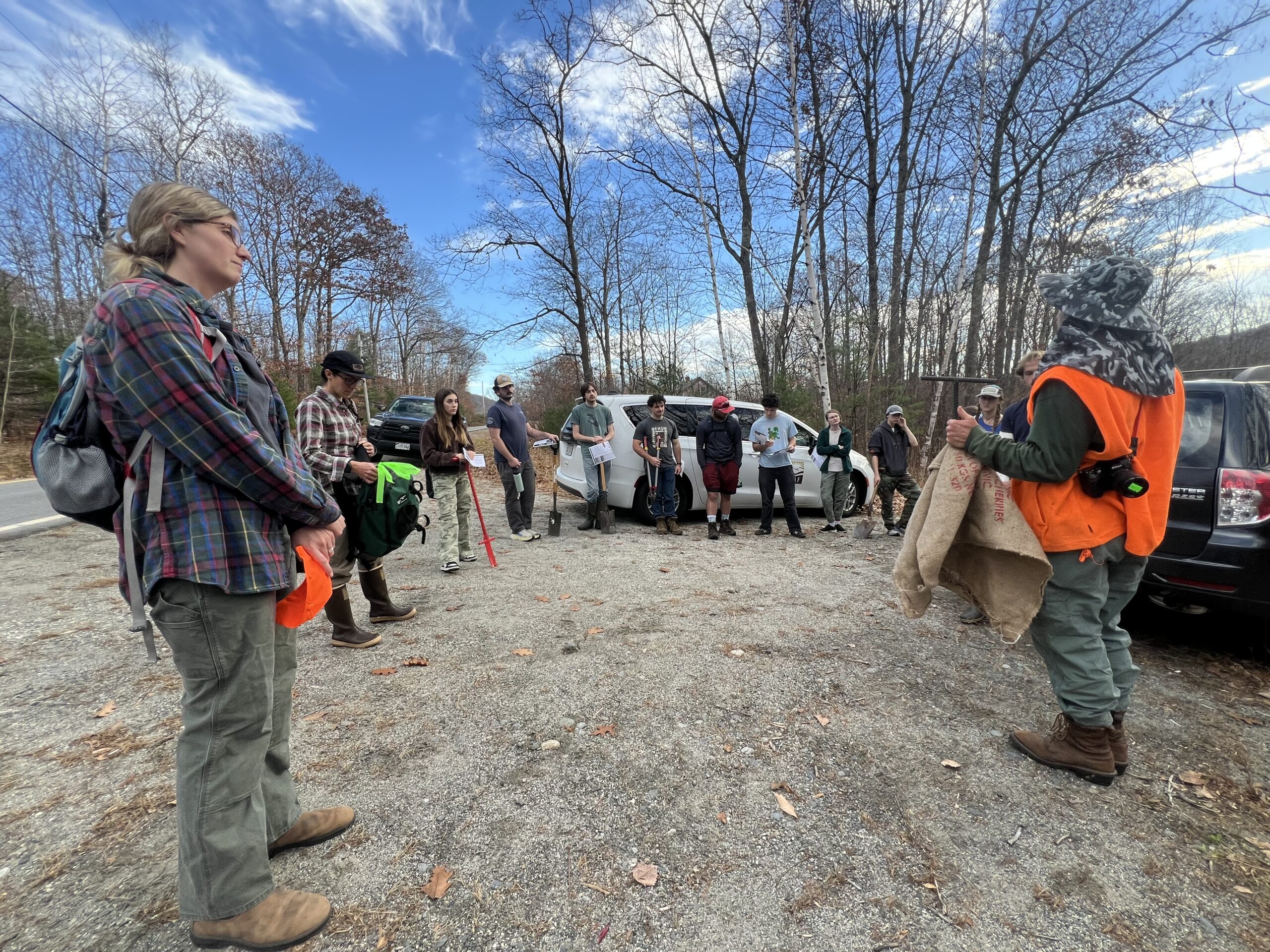
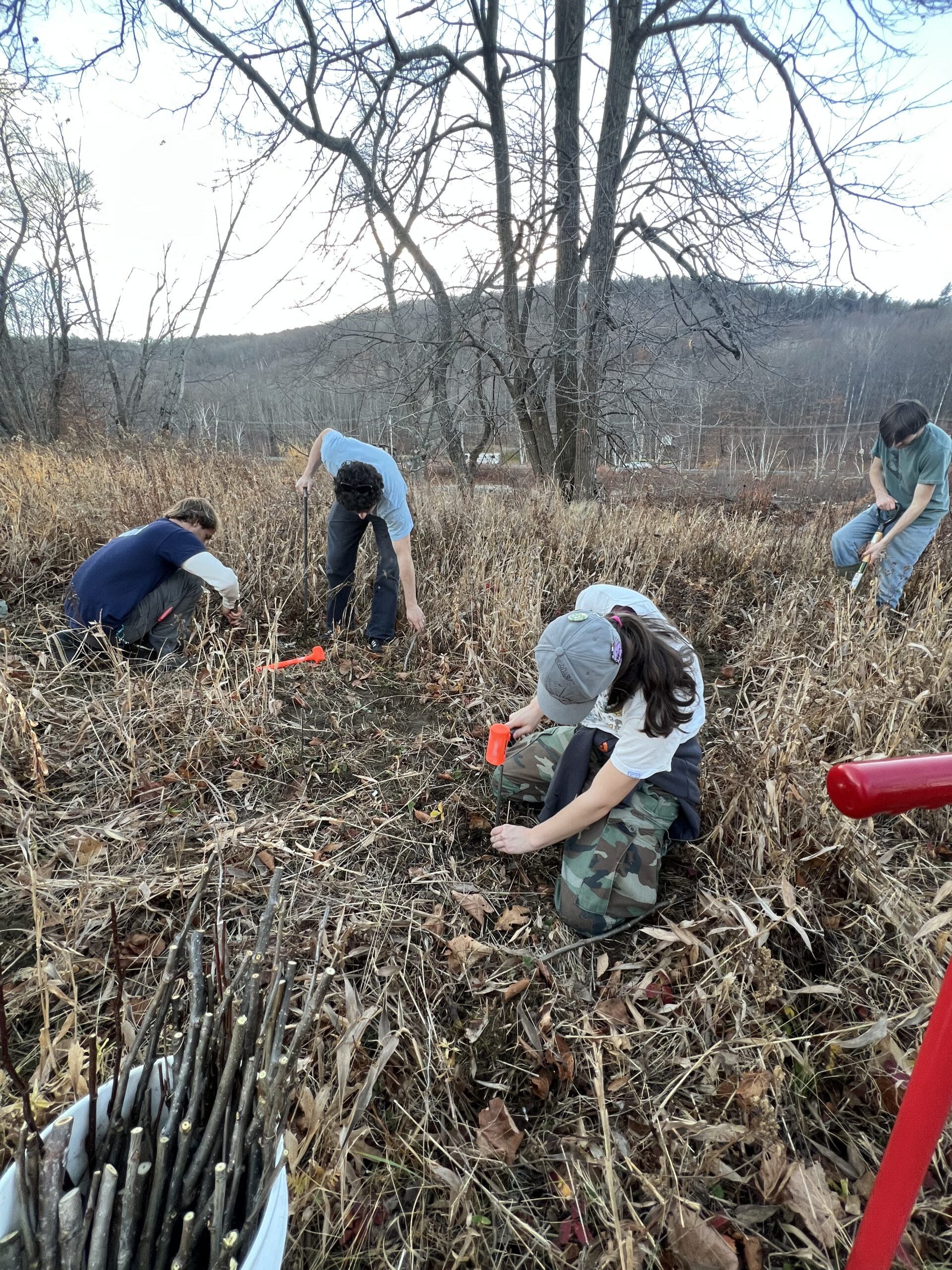
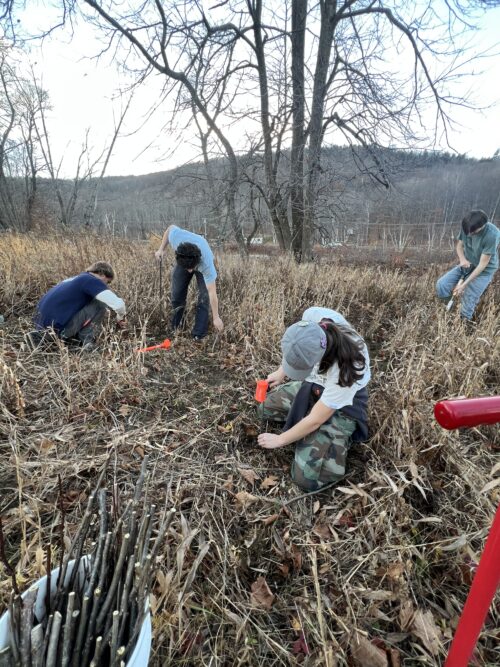
On November 4, Dr. Rachel Hovel brought 11 students from her Aquatic Ecology class at the University of Maine at Farmington out to the river, where Jordan Kimball from the Maine Department of Environmental Protection taught them how to live stake. Caroline Collins from the Franklin County Soil and Water Conservation District helped pull it all together, and we were lucky enough to tag along.
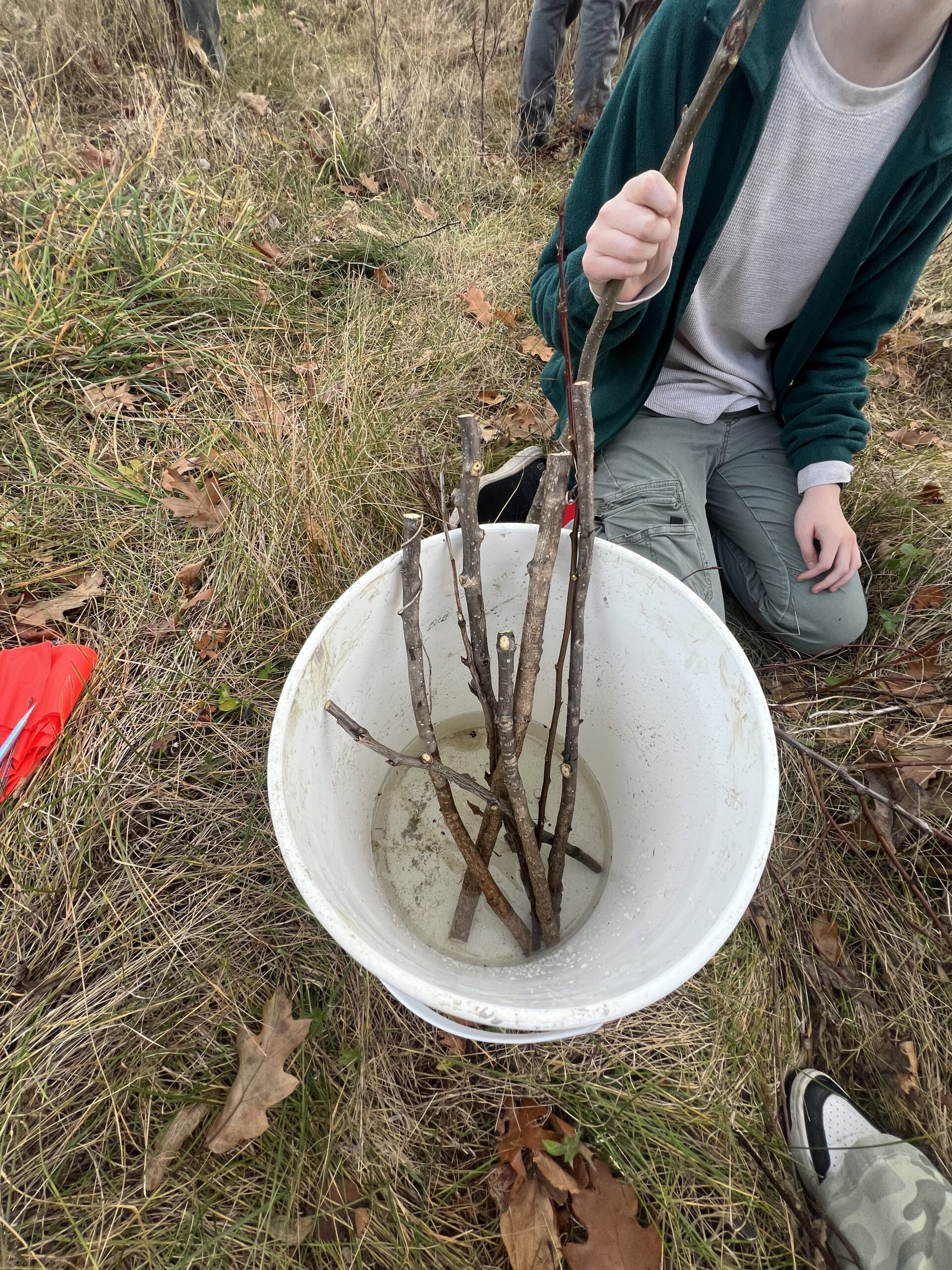
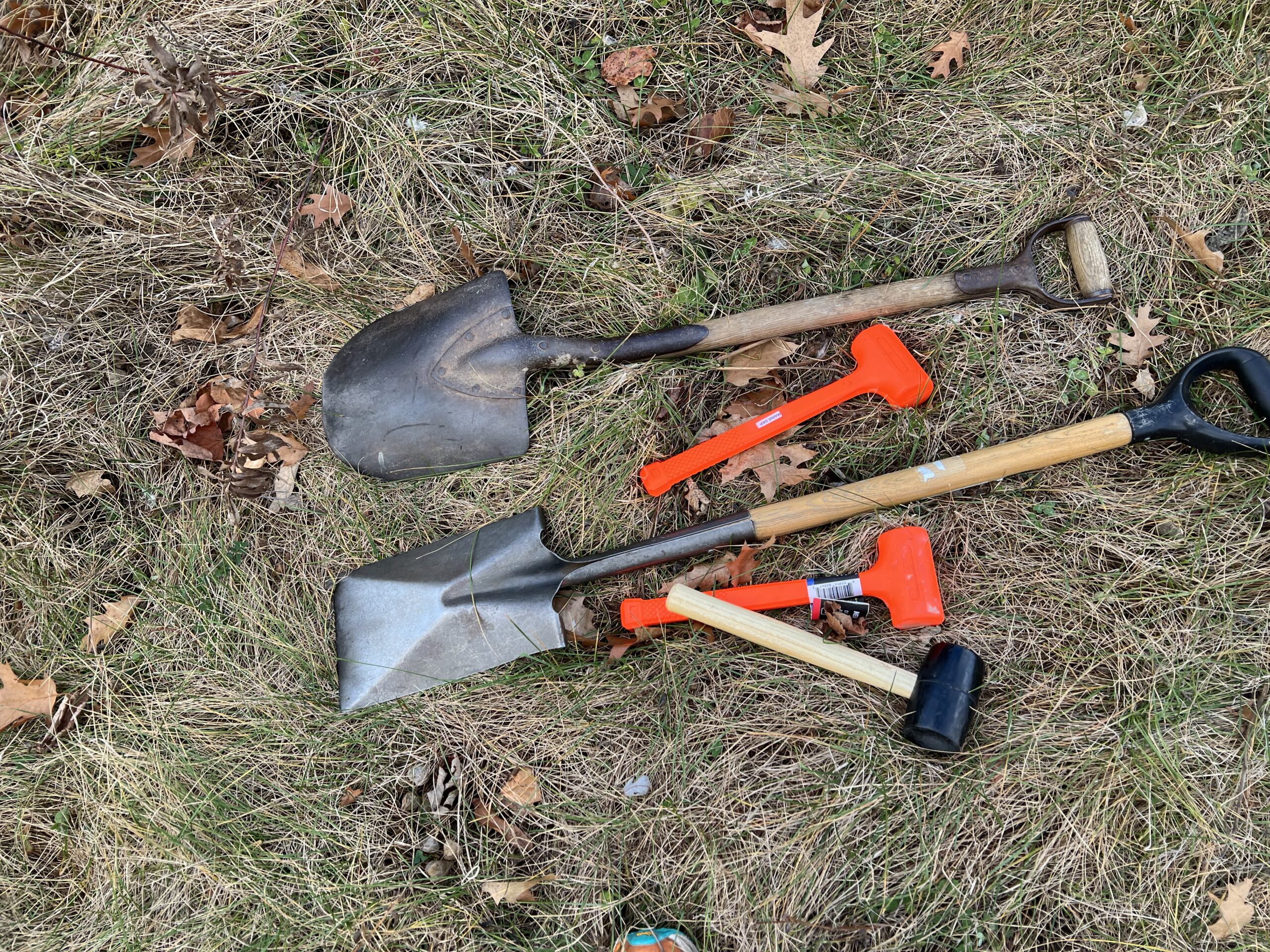
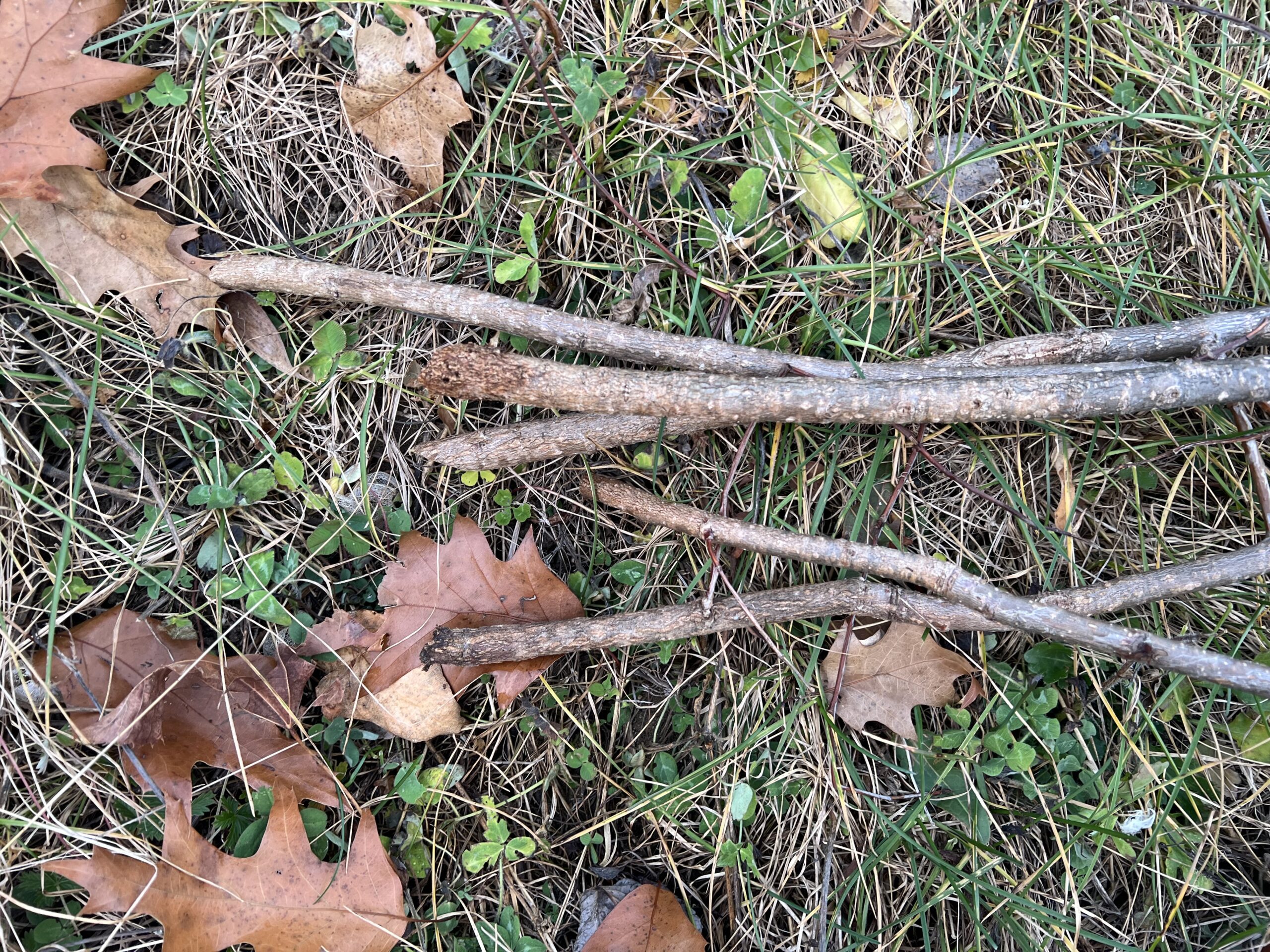
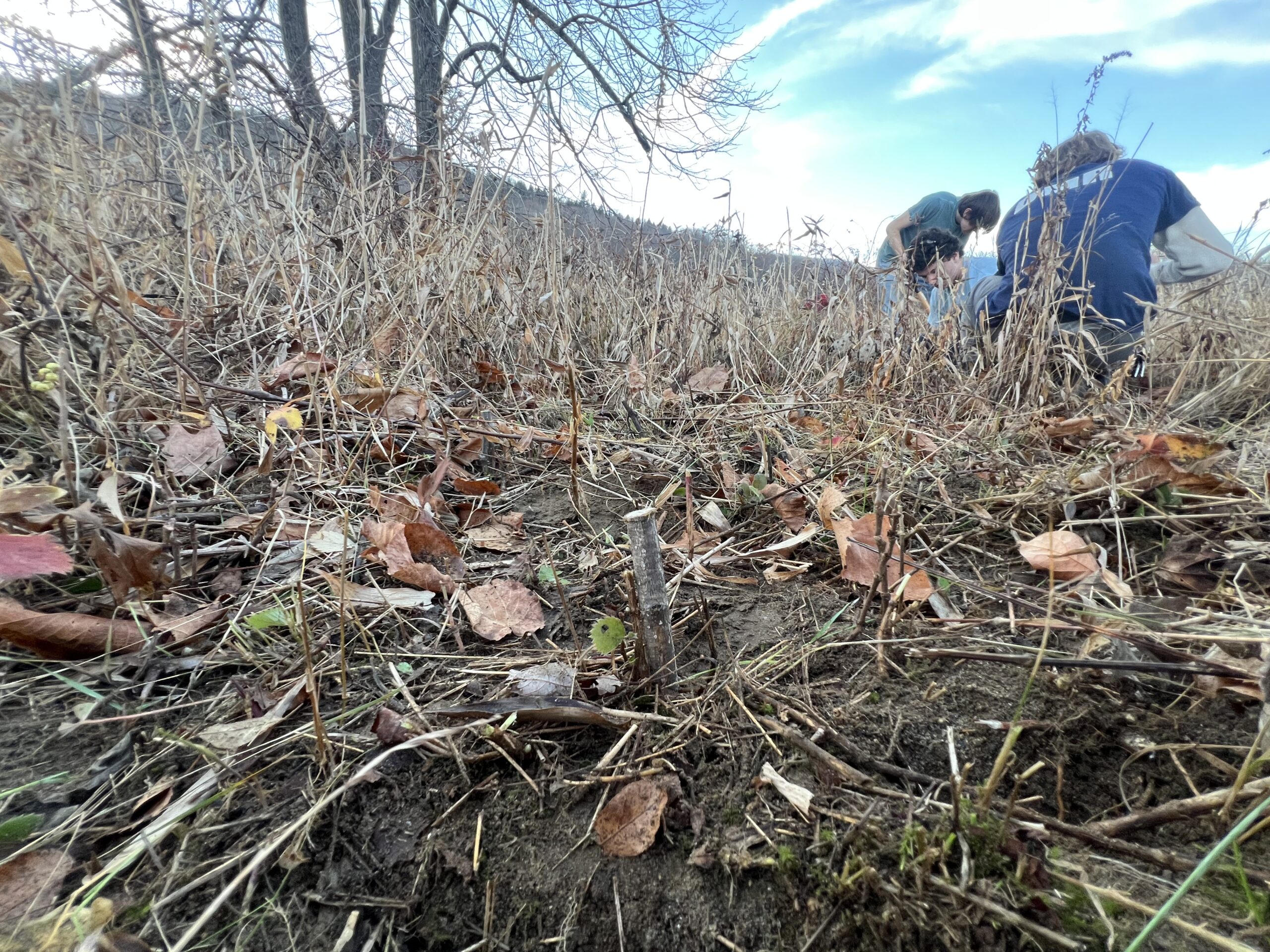
Live staking is beautifully simple. You cut lengths from dormant native trees and shrubs, push them into the ground, and let nature do the rest. Come spring, the stakes sprout roots and leaves, and over time those roots knit the soil together and keep the bank from washing away.
Even better, everything we planted came from right there. Rachel scouted the site and flagged a stand of balsam poplar just downstream, plus some small but dense patches of native heart-leaved willow along the bank.
By the end of the afternoon, the group had planted somewhere between 100 and 150 stakes across a 25-by-60-foot stretch of sandy embankment and field. Not bad for two hours of work! The students flagged where they stopped, and they’ll be back next summer to water the stakes and knock back competing plants so the new growth gets a fighting chance. We’ll watch how many leaves sprout in the spring.
This is exactly the kind of place High Peaks Alliance is working to protect. We’re raising funds to conserve the Walrath Extension so it stays open for learning, recreation, and healthy rivers for generations to come.
A big thank you to Rachel for organizing the workshop, Jordan for teaching it, Caroline for coordinating, and the students for all their hard work. We’re grateful the Walrath Extension could be part of it.