Dan Rhodes: Reflections from the High Peaks
High Peaks Alliance is pleased to share the final essay in a series of six guest op-eds from volunteer Dan Rhodes. In 2024, Dan and his wife settled in Kingfield with their son, building a life and making a home in the High Peaks region while Dan travels back and forth for his work.
In this series, Dan offers reflections on life in Maine’s High Peaks region, community connections, and the value of conserving access to the lands and trails that make this place special.
To Our Son
By Dan Rhodes, High Peaks Alliance volunteer
Thank you to the High Peaks Alliance for asking me, a transplant, to write this short series of articles about preservation in Maine’s High Peaks region. I’ve done my best to convey the sense of awe and respect for this singular place and the people who inhabit it. But so much of the reason we chose this place has to do with our son. So, this last installment is for him, with gratitude to the High Peaks Alliance.
When you, your mom, and I visited Western Maine for the first time, I want you to know that what drew us in was the people as much as it was the beauty. Community is such a wonderful thing. But some communities feel more alive than others, and in the end, a community is what makes a place thrive.
When we talk about how beautiful your home is, you need to understand a few things. First, even though we have been awed by the beauty of Western Maine, what you and I see is very different from what others who have been here longer than us have seen. Over time, woods have been cleared, buildings have sprung up where before there was only nature, and some places that meant everything to someone no longer exist.
On some level, that is inevitable. All things change with time. Trying to stop or deny that will only lead to bitterness and resentment. But when we compare what still exists in your home with what we have seen elsewhere, especially in big cities, there is an undeniable core of wild beauty that persists. You can never take it for granted that it will exist tomorrow.
That is why I wanted to write these articles, to provide support in my own small way to the idea that preservation takes effort and hard work. It takes people recognizing that every time access is blocked to a place that was open to everyone before, it is a collective loss.
Wild spaces rarely disappear overnight, or with one massive land transfer. Instead, they disappear slowly, like the changing of the seasons, until you realize you’ve lost something without any conscious awareness of when or how it happened. That can be very frightening. But there are so many good people who recognize the danger of this slow erosion, and they work together to keep these wild places open and free and accessible to everyone.
📸 Perham Stream Birding Trail
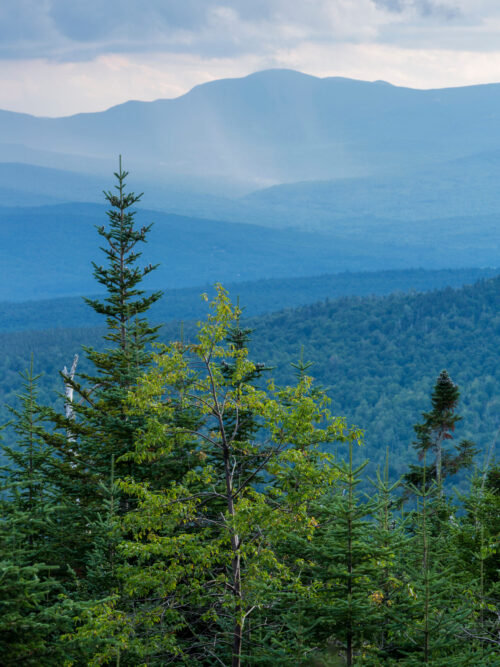
I am so excited to see the man you will become. And I know the land around you will play a role in shaping your identity. I hope growing up around such awe-inspiring woods and peaks and rivers and meadows helps you remember what it’s like to feel small, to feel humbled before something much bigger and more ancient than any single human life.
I hope it helps you understand that we are all connected to the natural world, and that this connection creates a kind of debt that we need to acknowledge and honor.
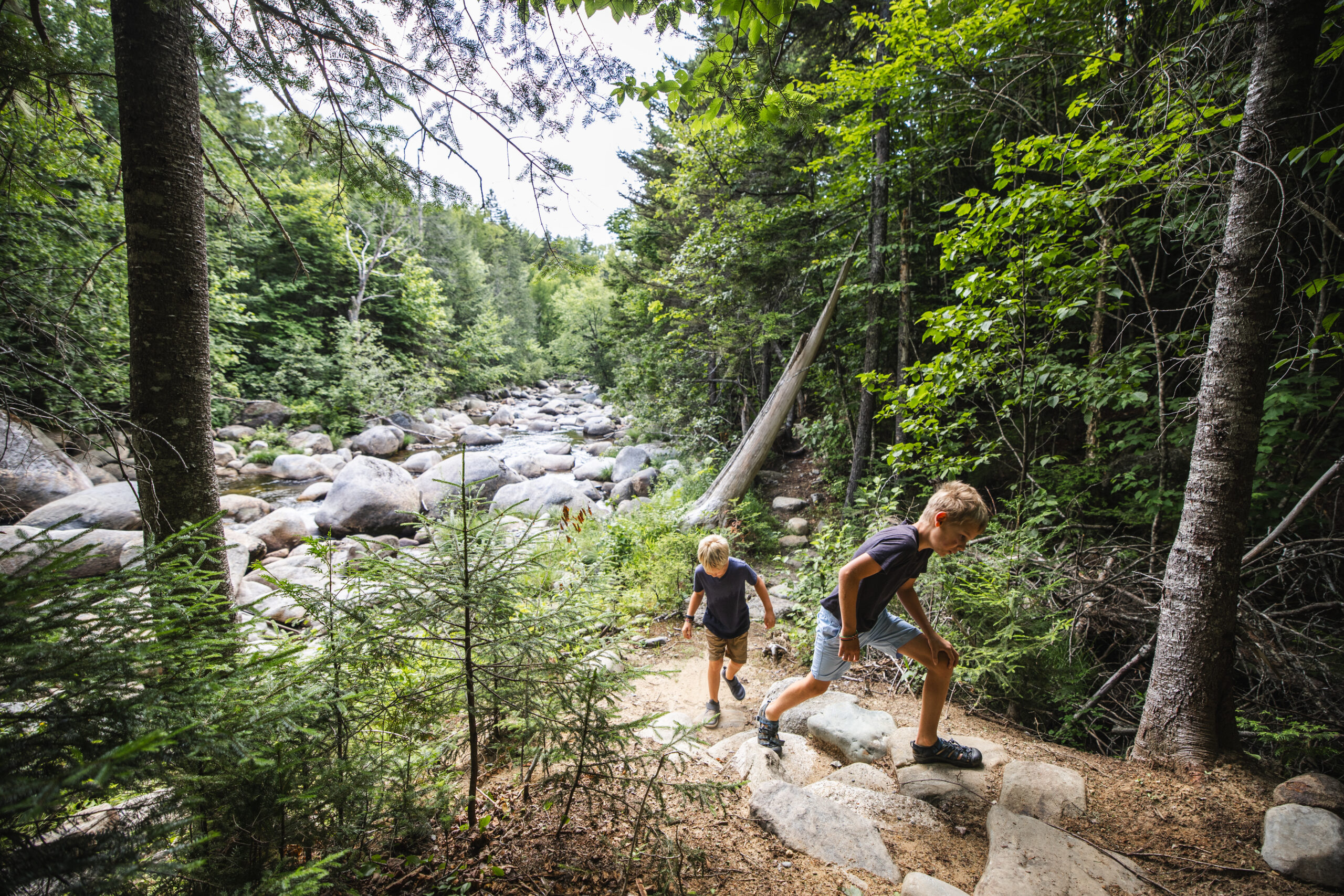
Some of the best memories of my life so far have been visiting these places with you, talking to you about the things we see together, and seeing how curious you get about animal tracks in the snow or showing such an amazing attitude about trying new things.
So, as you get older, and as you slowly start to appreciate how fortunate you are to inhabit such a wild and special place, I want you to remember that debt to the land. I hope you’ll appreciate the men and women all around you in your community who have dedicated their lives to honoring it in this special place.
Your mom and I love you more than anything, and we are already so proud of you.
With love,
Dad
Thank you, Dan
Thank you, Dan, for this heartfelt final essay and for sharing your family’s connection to the High Peaks. We are grateful for your reflections throughout this series and for the reminder that protecting public access to wild places is a gift we pass on to future generations.