
Dan Rhodes: Reflections from the High Peaks
High Peaks Alliance is pleased to share the fourth in a series of six guest op-eds from volunteer Dan Rhodes. In 2024, Dan and his wife settled in Kingfield with their son, building a life and making a home in the High Peaks region while Dan travels back and forth for his work.
In this series, Dan will offer reflections on life in Maine’s High Peaks region, community connections, and the value of conserving access to the lands and trails that make this place special.
A Gift and a Tradition
No Mainer need be reminded of the absolute gift of this state’s natural splendor. Even the simple privilege of breathing fresh air might seem trivial, but there are many places where even clean air is a novelty. I have visited places where, in their drawings, schoolchildren color the sky brown or yellow, reflecting their daily reality because of rampant air pollution. Even today, when I’m on the trail on a crisp Maine morning, the sun is climbing, and the sky is a perfect shade of deepest blue, I think about those kids.
Nowhere is perfect, and even someone not from Maine can see it has its own share of real, pressing issues. But still, I am constantly in awe of this land, of this seeming sanctuary of greenery, rivers, beaches, and mountains. Maine’s tradition of public access to land fosters collective appreciation of these gifts. While not unique in the world, this (excellent) tradition is new to me. Different places call it different things, but ultimately, what it comes down to is the “right to wander.”
The Cost of “Posted”
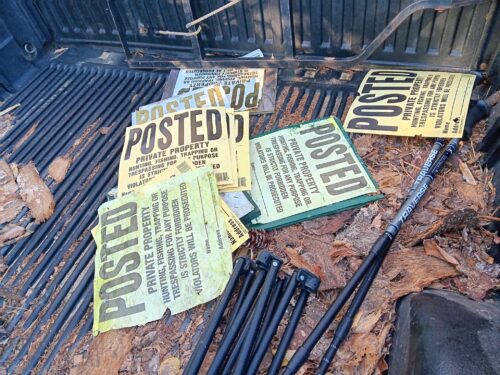
Of course, there are exceptions, and access to private land, especially, is conditioned on the landowner’s knowledge and permission. I would never argue landowners don’t have a right to determine who comes and goes on their own land, but I applaud every private landowner who commits to honoring this tradition. When the dreaded “Posted” signs pop up in a place that was previously accessible, it has a real and tangible impact on everyone in the community. Whether new landowners are simply unaware of Maine’s tradition of public access or old landowners have a grudging change of heart because land users abused their goodwill, the result is the same: something shared is lost, and the wild we can wander gets just a bit smaller.
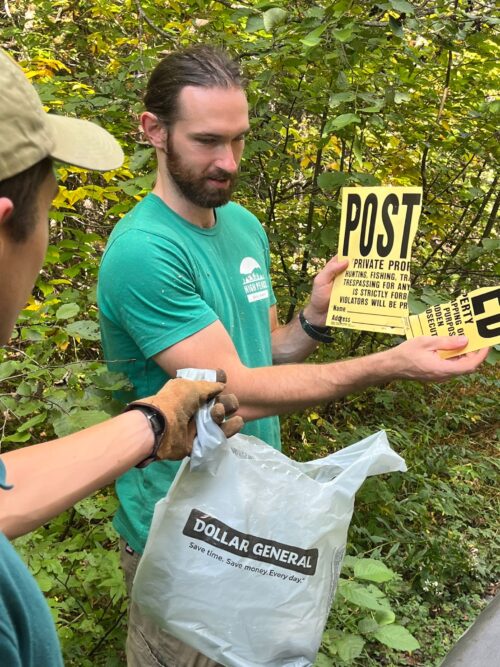
Click the link below to watch HPA in action as we remove “Posted” signs on the Barnjum parcel in the Keystones Projects lands—real work that keeps Maine’s tradition of public access alive.
📸 High Peaks Alliance removes Posted signs on newly conserved Keystones lands.
So many Mainers have an interest in seeing public access continue, but even so, over time, more Posted signs appear. There is a very real race going on between those who would preserve and enshrine public access and those who (for whatever reason) decide to take that access away, to keep it for themselves. But for every Posted sign that goes up, countless other noteworthy accomplishments are preserving public access. I’m proud to support the High Peaks Alliance and groups like them in leading this effort throughout Maine.
A Fragile Future
It’s not my place to tell Mainers what they have: you know already, and better than I ever will. But having lived in so many other places where the expectation is that anything other than your own land (if any) and public spaces are strictly off limits, I do hope Mainers recognize how fragile this endowment of natural beauty is, and that the danger is not sudden change but rather the slow erosion of access, heralded by simple signs that read “Posted.”
Take Action
This is the fourth in a series of six op-eds by Dan Rhodes. Stay tuned each month for future pieces exploring the intersections of everyday life, public access, and outdoor recreation in Maine’s High Peaks region.
If you value access to these lands and trails, we hope you’ll join us by volunteering, attending events, or supporting the High Peaks Alliance’s work to protect public access for generations to come.