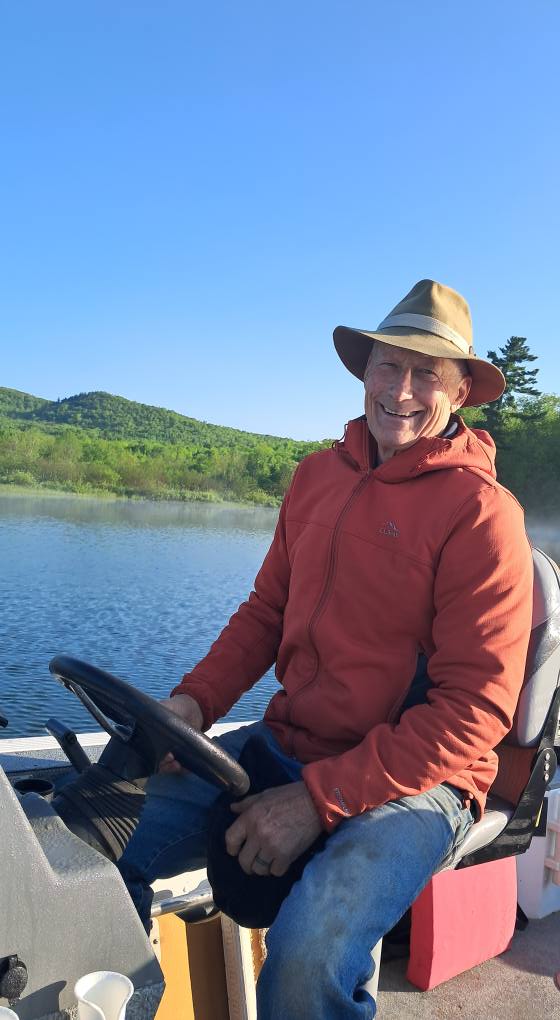
Meet David Lovejoy
David Lovejoy and his wife, Mary Lello, have spent years caring for their Temple land as both home and habitat, and now they are taking the long view by making a legacy gift to protect it for the future. Their decision reflects a deep sense of stewardship, shaped by the property’s streams, woods, wildlife, and the belief that land this special should always be accessible for generations to come.
Built Around the View
For David and Mary, the land they care for in Temple is more than a place to live. It is a place to steward, protect, and one day pass on.
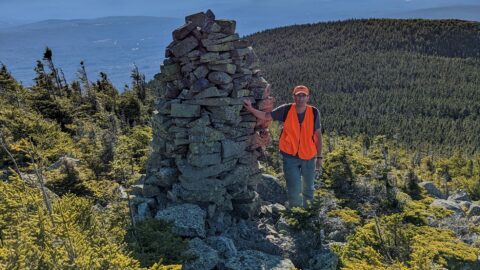
“Mary and I are both well-traveled, and both born and bred in Maine,” David said, reflecting on the path that brought them back to Maine. He has spent time in the service, climbed across the West, and lived in places far from the High Peaks region. But no matter where he went, Maine kept calling him home. “I always knew I was coming back to Maine,” he said. “I felt it in my heart.”
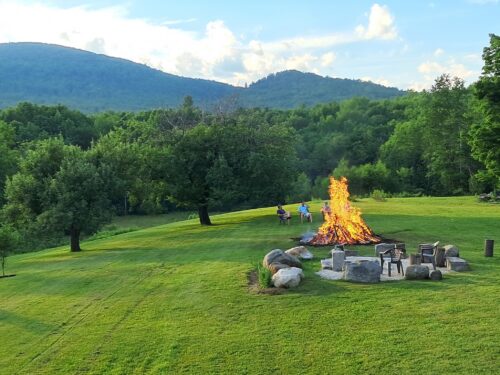
When David and Mary began looking for a place to settle, they knew they wanted land with a view. They searched in and around Farmington, hoping to find a property that felt right, and eventually came across the Temple land almost by chance. David remembers the moment clearly. “We came down to the end of the road, and we looked to the right,” David said. “Oh my, is this the place? Look at this. This is amazing.”
That first look changed everything. The house on the property was rough, the fields were a mess, and the woods roads were overrun, but they could see past all of that immediately. “We fell in love with the land,” David said. “And it’s not a view we ever imagined we could have. This setting is incredible.” For David and Mary, the land came first. The house could be changed. The view could not. David jokes, “We built the house by propping windows up with two by fours and then built the house around them because we wanted the view.”
A Living Landscape
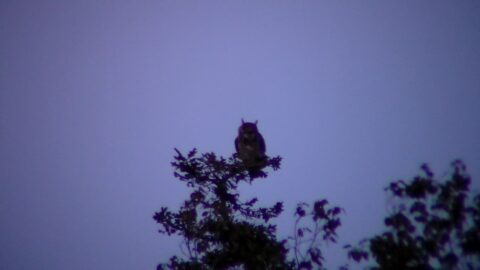
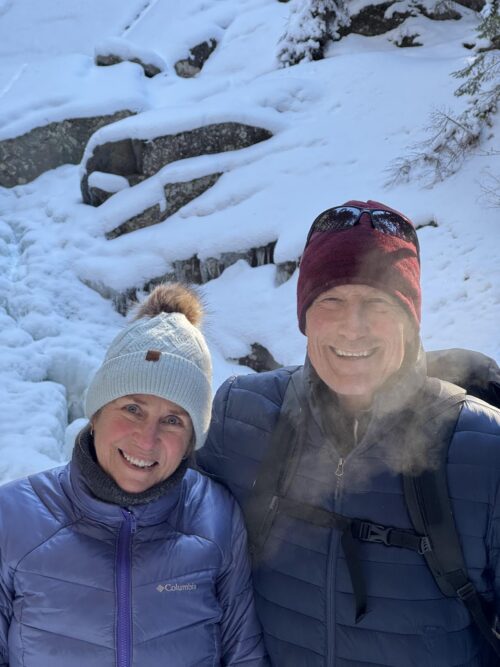
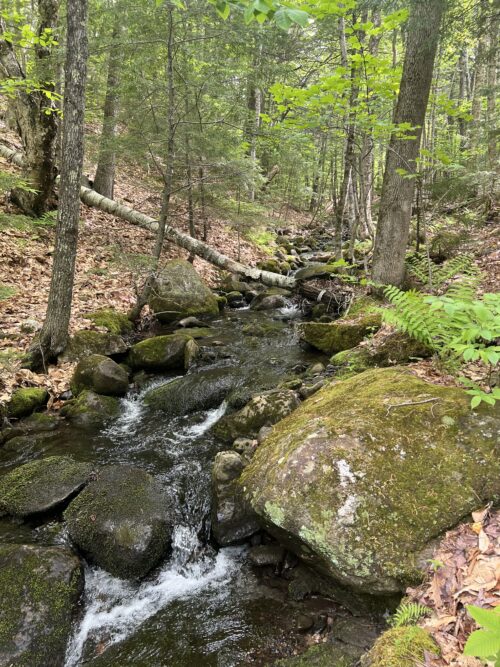
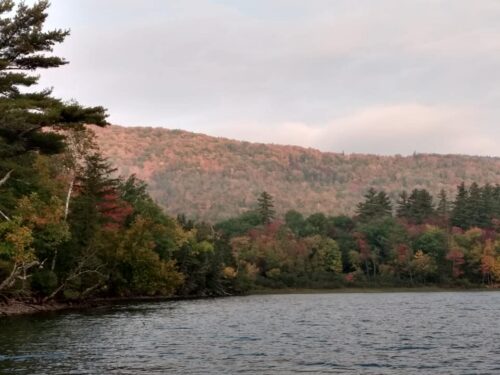
David talks about the property as an ecosystem. Three streams cross the land, and water shapes much of the experience there. “We’ve got fields and streams and lakes and mountains and forests,” he said, but water is always a delight. Whether you’re on a lake or pond or a stream, there’s always something happening.” He talks about peepers in the spring, fish spawning in the streams, birds moving through the field and forest, and the way the land keeps changing from one season to the next. It is not just a beautiful view; it’s an interwoven landscape, where birds, water, trees, and people can all come together.
One of the clearest signs of that living system is the stream habitat itself. David points out that two kinds of Suckers spawn in the biggest stream, and their presence says a lot about the health of the water. Suckers are spring spawners, and they move into shallow, moving water when conditions are right, using gravelly bottoms and clean flow to reproduce. Their spawning activity depends on water quality, steady current, and access to intact stream habitat, which makes them one of those quiet species that signal whether an ecosystem is working the way it should.
This sense of life is what makes the property feel so complete. For David and Mary, this is part of the beauty of the land: it’s not just something to look at, it’s something alive enough to support all of the wildlife that Maine has to offer. The streams are not isolated features, and the birds are not incidental. Moose, bear, deer, and bobcat are also here to be seen. Everything is connected in this amazing piece of Maine.
Carbon and Stewardship
That sense of life extends to the larger forest around them, and this is where carbon becomes part of David and Mary’s thinking. They see the land as more than a beautiful place to walk or watch the seasons change. They see it as a working landscape that holds carbon in its trees, soils, roots, and wet ground. Keeping their land and its ecosystem intact means keeping that carbon stored in place, where it can stay part of the forest instead of being released into the atmosphere.
In that spirit, David and Mary enrolled their land in the Family Forest Carbon Program, an opportunity designed to help family forest owners store more carbon while supporting forest health and resilience. For David, that choice fits naturally with stewardship: it allows the woods to keep growing, keep working, and keep serving a purpose beyond any one lifetime.
That is one more reason conservation matters. It is not only about preserving a view or protecting wildlife, although those things matter deeply. It is also about leaving the land in a condition where it can keep functioning as a living carbon sink, absorbing and holding what the forest naturally gathers over time. This idea fits with their wish that the property be allowed to “grow to maturity.” For David and Mary, a mature forest is not a static thing. It is a healthy, complex system that continues to store carbon, support habitat, and build resilience over time.
A Place People Use
The land is also part of other people’s lives. David and Mary know that their property is used and appreciated by a wide range of people, from hunters, fishermen, and birders, to equestrians and neighbors who value open space. That matters to them because it confirms what they already believe, that the land is bigger than one household and richer for being shared in respectful ways. For David, the idea that others come to the property to experience the woods, the wildlife, and the open terrain is part of what makes conservation feel worthwhile
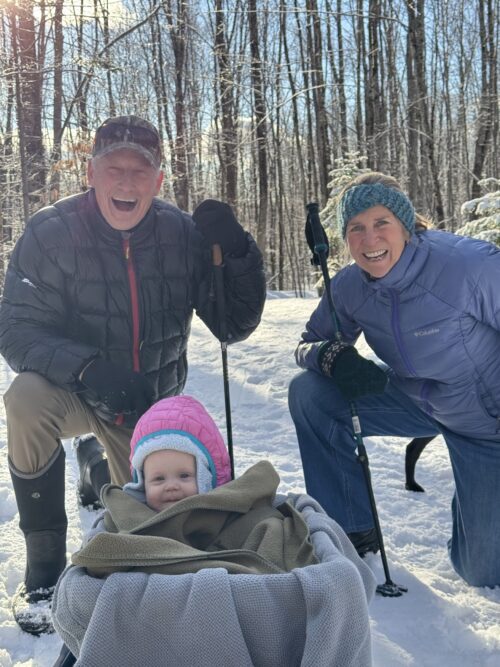
He and Mary have spent years learning the land by moving through it in every season. They snowshoe when the snow opens the woods up. They walk the property daily and delight in watching the weather move through. They know the streams, the ridges, the old pines, and the places where the land feels especially alive. David pointed to a grove of large pines near the back of the property and described them as sacred. Those trees, like the rest of the forest, are part of the carbon story too. The bigger and healthier the trees, the more carbon the landscape can keep stored away in living wood and rich forest soil.
That long view is part of why they chose to include the land in their will to the High Peaks Alliance. David speaks about the decision to keep the property from being lost to short-term profit-making decisions. Through their planned donation, they hope it will remain a place where people can experience mature forest, wildlife, and the kind of quiet joy that is becoming harder and harder to find. “I’d be delighted if it remains close to what it is now,” he said. “There’s so much to be learned and so much value in the lands that we have. We can’t lose them all.”
It's All One
For David and Mary, the decision to include the land in their will is not just a private family choice; it is a public statement about what matters most. They want the property to remain part of the landscape, part of the watershed, and part of the future of the High Peaks region. “We want this parcel to be a natural environment that grows to maturity.” He sees that future as tied not just to beauty, but to function, because mature forests delight people, protect water, store carbon, and provide peace for all who enter.
He hopes others will think about legacy gifts in the same spirit. The idea, he said, is not to be grand about it or to think of it as giving something up. It is to recognize that the land has value beyond one lifetime, and leaving it protected is a way of caring for the people who come after us. “It’s not always ego that’s involved in leaving something behind,” he said. “It’s just that looking out for the land helps us all. Once it’s gone, well, the small losses keep adding up. As Mary keeps reminding me, we are only temporary stewards of this land, and we need to respect that.
David also says there are practical reasons to think about donating land for conservation. He says, “Lifetime ownership of private lands can be expensive, and taxes can be a burden. To continue long-term stewardship in Maine,” he noted, “Tree Growth, Open Space, and Carbon Sequestration Programs are all options available to help to offset taxes.” But donating a special parcel for conservation can be an additional helpful tool in a stewardship model.
Believing in the Land
“If you believe in the land, if you’re connected to it, if you want to continue to have others be able to appreciate it, then a donation to The High Peaks is worth looking into,” he said. “That decision, for us, is a comfort and an honor. A legacy gift is not only about protecting land. It’s also about stepping up for the future in a way that is real and lasting.
When they imagine the land decades from now, David and Mary hope it will still feel wild, alive, and deeply rooted in place. “We’d be delighted if it remains close to what it is now,” he said. “There’s so much to be learned and so much value in the lands that we have available to us in Maine. We can’t afford to lose them all.”
For David and Mary, that is what legacy means. It is not just conserving a parcel of land, it’s also protecting a way of life, a forest, a watershed, and a place where future generations can still stand, look out, and feel at peace. “We’ve got fields and streams and lakes and mountains and forests,” David said. “We got it all right here.”
Creating Your Legacy
If you want to take that step, now is the time to start the conversation. A legacy gift can be as straightforward as including High Peaks Alliance in your will or estate plans, and it can be shaped to fit your goals, your land, and your family. The important thing is to begin, ask questions, and imagine what it would mean for your piece of Maine to keep serving the future long after you are gone.