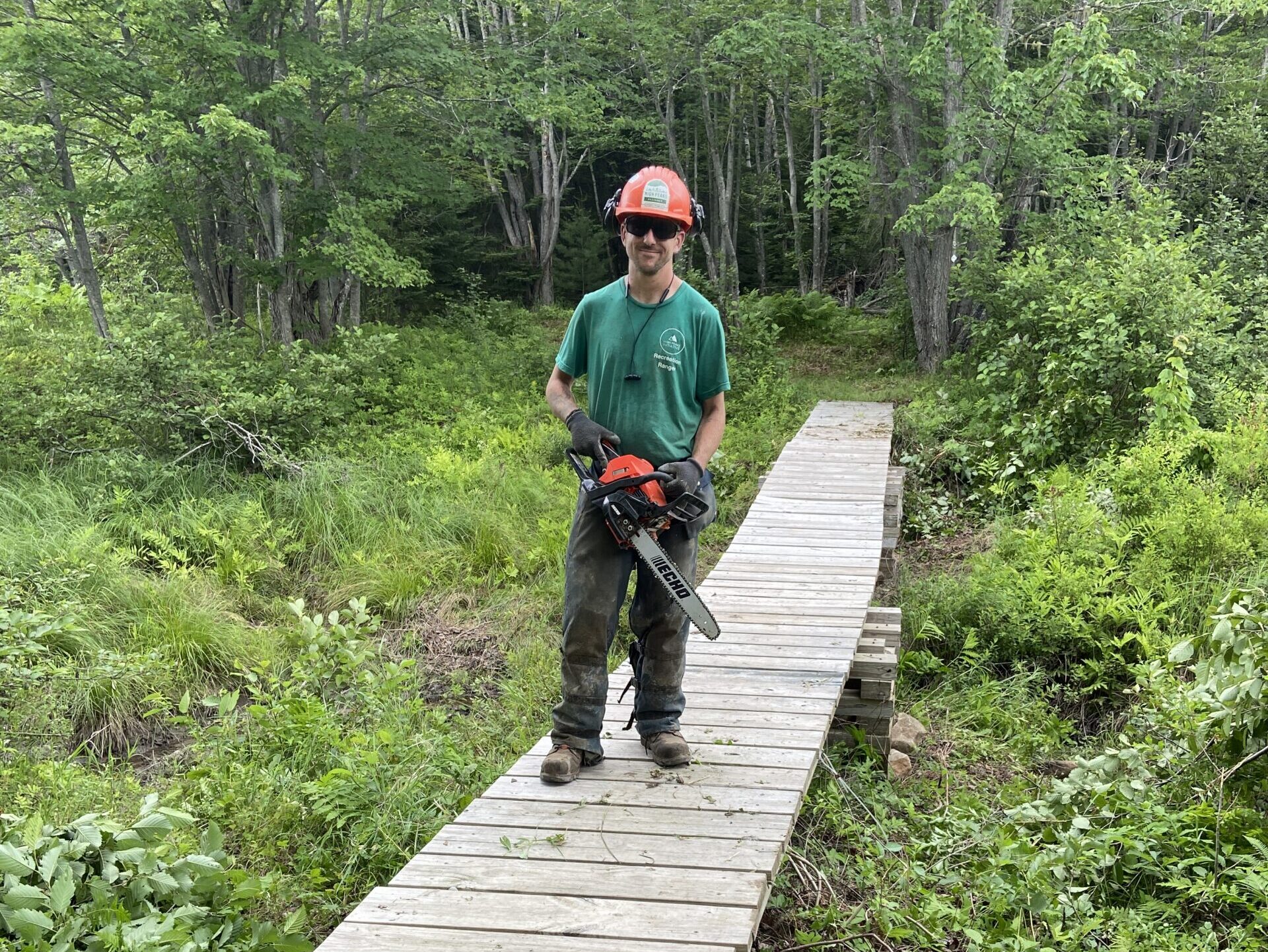
Meet Jake Treadway
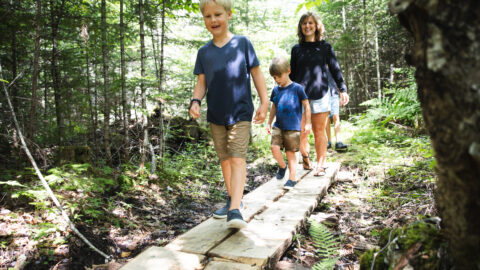
Most hikers remember the views. Jake Treadway notices the bridge beneath their feet. The rock staircase that makes a steep climb a little easier. The bog bridge that keeps boots dry and wetlands protected. The freshly cleared corridor that lets a family, an older hiker, or a first-time visitor experience the woods without worrying about fallen trees or washed-out trail.
For Jake, those details matter because he helped build them. “The most rewarding part of any trail crew project,” he says, “is going back two, three, four weeks later and seeing what you’ve done and being able to say, ‘Hey, I did that,’ and just seeing people enjoy it.”
That quiet sense of pride is what brought him from southern Indiana to Maine’s High Peaks and continues to motivate him through long days of physical work in the woods.
From Indiana to Maine
Jake grew up in Corydon, Indiana, where he developed a love for working outdoors. Before coming to Maine, he spent time on a trail crew in Colorado, learning the skills that would eventually lead him east.
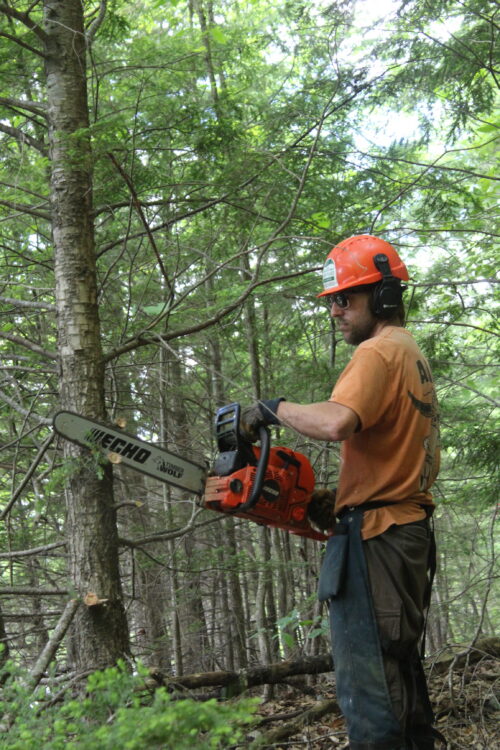
“I’ve always just liked being outside,” he says. “I’ve always liked working with chainsaws and brushers.”
Maine had long been on his list of places to experience. When he started looking for trail crew opportunities, one place stood out. “I like snowboarding, and I heard really, really good things about Saddleback,” Jake says. “I did some research on the town of Rangeley, and it just seemed like something I would like to be a part of.”
What began as curiosity quickly became something more.

A Different Trail Every Day
Trail work isn’t repetitive, and that’s exactly what Jake enjoys most. “Definitely being outside and being able to see something new every day,” he says. “I’m not a very big fan of just doing the same thing every day.”
One day might involve running a chainsaw. Another might mean building a bog bridge, installing rock steps, clearing storm damage, or hauling heavy timbers deep into the woods.
That variety keeps every week interesting, but it also comes with its share of challenges. Early in the season, carrying large bridge timbers across long distances tested his endurance. Before long, though, he adapted.
Jake approaches every week with simple goals. “Every day I just want to set little short-term goals—what am I going to do this week to improve myself?”
Those goals extend beyond trail work. Jake hopes to pursue a career in wildland firefighting, and he sees every day on the crew as preparation for what’s ahead. “I want to get into wildland firefighting,” he says. “Work hard now, and maybe down the line it’s going to be a little bit easier for me.”

Leaving a Mark
Everyone remembers their first project. For Jake, it was the Fly Rod Crosby Trail.
It was the first time he spent an entire day running a chainsaw while clearing trail with crew leader Matt. “It was really my first, ‘Hey, you’re in trail crew in Maine’ kind of moment,” he says.
The experience carried a deeper meaning than simply learning new skills. “I went through that whole trail, and me and Matt were the two ones who cleared it,” Jake says. “That was kind of my first mark on Maine.”
Since then, each project has become another opportunity to leave something lasting behind. One of his favorite memories came while helping construct new bridges at Mosher Hill Falls.
“There were some good memories with the crew,” he recalls. “Just being able to know that we impacted everybody’s day-to-day lives just with those two bridges was pretty cool.”
Weeks later, he returned to the site as a visitor. “I definitely saw more people going there and using the bridge.” He experienced the same feeling at Hatchery Brook after the crew installed new bog bridges and a rock staircase. “It was just cool to walk by those projects and be like, ‘Hey, I did that.'”
The Work Most People Never See
Before joining a trail crew, Jake admits he rarely thought about what went into the trails he enjoyed. “I’ve hiked a lot,” he says, “and I never once really took a step back and thought to myself, ‘Who built these rock steps?’ or ‘How hard was it to build these rock steps?’“
That perspective has changed completely. Now, every bridge, drainage structure, and carefully placed stone represents countless hours of work by people committed to keeping trails safe and sustainable. “It’s easy not to think about those things,” he says. “But once you’re a part of it and actually do it, the rest of your life you will think about that.”
Trail crews do more than improve hiking experiences. They help protect the landscape itself by reducing erosion, managing water runoff, removing hazardous trees, and ensuring visitors stay on durable trail surfaces rather than creating new paths through sensitive habitats.
Without that work, Jake says, many trails would quickly become inaccessible. “If we didn’t have a trail crew, within two or three years, most trails wouldn’t be accessible anymore.”

Keeping the High Peaks Open
Ask Jake why organizations like High Peaks Alliance matter, and his answer reflects a deep appreciation for public lands.
“Without these organizations, a lot of rural Maine and rural America would get privatized,” he says. “What these organizations do is keep the land public and keep it accessible to the average person.”
That accessibility is something he believes everyone can help protect. “It doesn’t even have to be volunteering,” Jake says. “You could be out on a trail and maybe you see some trash—you can pick up the trash.”
Small actions, repeated by many people, make a difference. “Just having that little initiative” helps keep these places healthy for everyone.
Looking Ahead
When Jake thinks about the future of the High Peaks, he hopes the trail system continues to grow while protecting what makes the region special.
“I think we have a great system in place,” he says. “I just want to see it grow.” He also hopes the work his crew has completed will continue serving visitors for generations. “Our rock staircase at Hatchery Brook—that’s going to be there for 50, 60, 70, maybe 100 years,” he says. “I truly believe people are going to admire that for a long time.”
It’s a reminder that trail work is often invisible when done well. Visitors may never know who built the bridge they crossed or cleared the path ahead.
But Jake knows. And that’s enough.
Thank You, Jake
Jake’s story reminds us that stewardship often happens quietly. It’s the long days carrying heavy timbers into the woods. The careful work of building bridges, clearing trails, and protecting the landscape. The satisfaction of returning weeks later to see families, hikers, and neighbors enjoying something you helped create.
Whether he’s running “Big Bertha,” his trusty chainsaw, building bridges at Mosher Hill Falls, or helping create trails that will last for decades, Jake is leaving a lasting mark on Maine’s High Peaks.
As he puts it, the region is “a very healing place. There’s a lot to see, and it’s beautiful,” he says. “You never know what you might find up here in the hills.”
Thank you, Jake, for helping ensure those hills remain open, welcoming, and accessible for everyone who follows the trail.