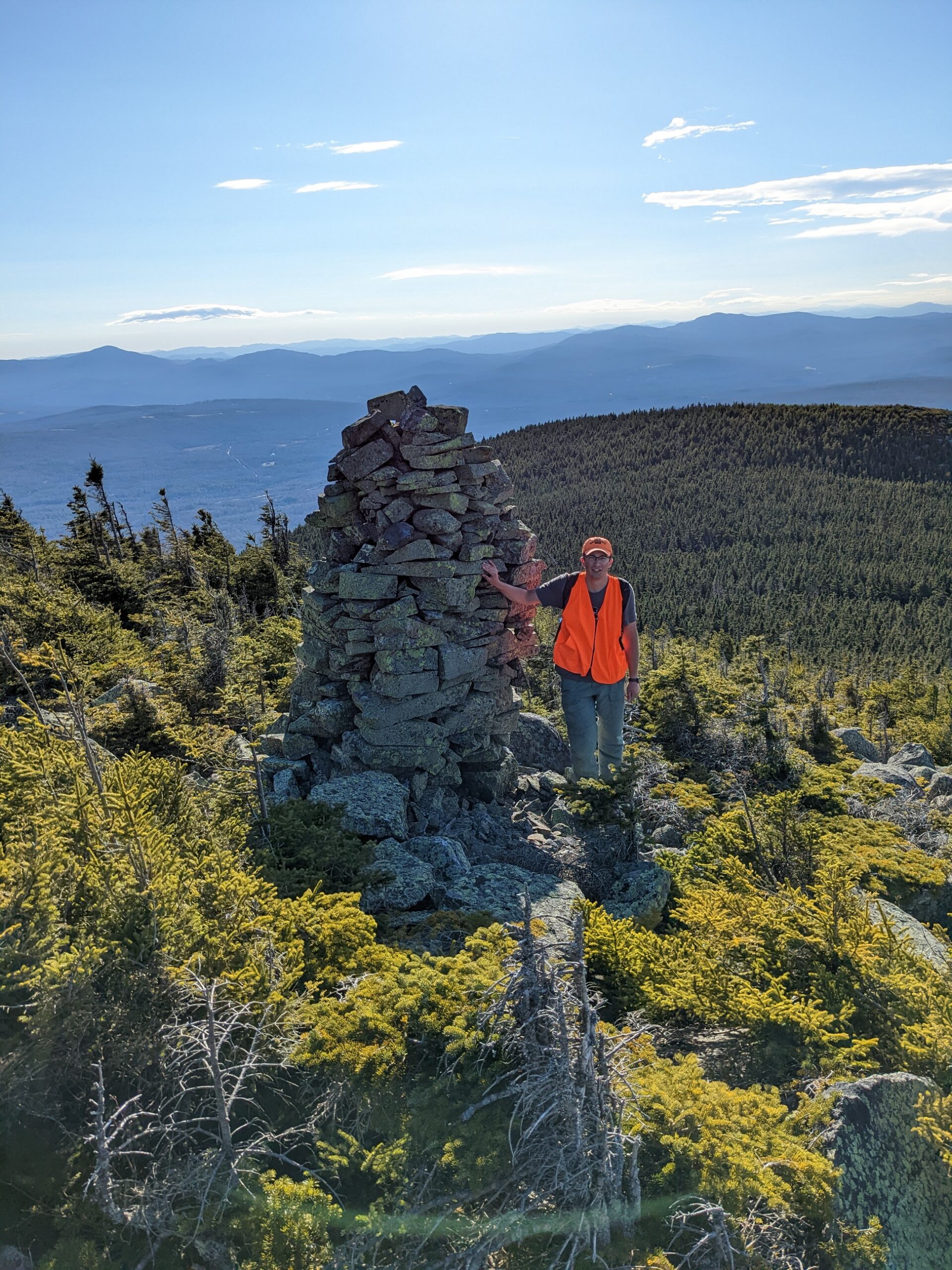
Meet Sam Shirley
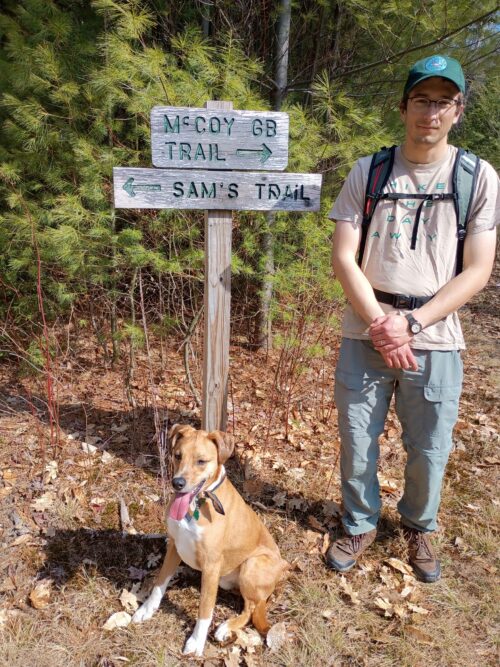
Some people return to the same favorite trail year after year. Sam Shirley is usually looking around the next bend.
Ask him what keeps him excited about living in Maine’s High Peaks, and his answer comes without hesitation: “There’s always somewhere new to see.”
It is more than a love of exploration. It is the thread that connects nearly every part of Sam’s story; from childhood trips to Maine and studying at the University of Maine at Farmington, to his work with High Peaks Alliance and Maine Huts & Trails today. Curiosity has become both his compass and his conservation ethic. Every new trail, overlooked pond, or conversation with a longtime local has reinforced the same belief: the High Peaks is a place that reveals itself slowly, rewarding those who take the time to pay attention.
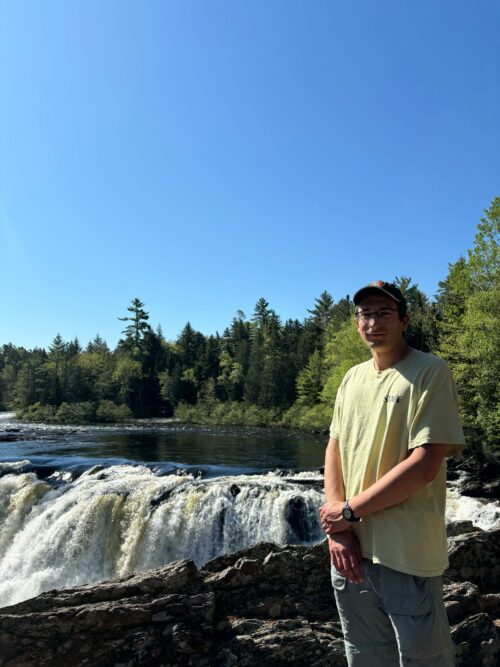
A Landscape That Keeps Giving
Although Sam grew up in Massachusetts, Maine has always felt familiar.
His family spent summers exploring the state, and many of his earliest memories are tied to time outdoors. Winters meant skiing. Summers meant hiking. By the time college approached, he knew he wanted to stay close to the mountains that had shaped those experiences.
He moved to Farmington in 2018 to attend the University of Maine at Farmington and has lived in the region ever since. What continues to draw him back isn’t simply the mountains themselves, but the experience they offer.
“I don’t think there’s anywhere else quite like this area in the East,” Sam says. “You think about New Hampshire, Vermont, or the Adirondacks—they’re a lot busier.”
Here, he says, the landscape still feels expansive. “There’s nowhere quite like this where we have so many big mountains, and there’s still so few people out in them.” That sense of space has become one of the defining characteristics of the High Peaks. Even after years of exploring, Sam believes he’ll never run out of places to discover.
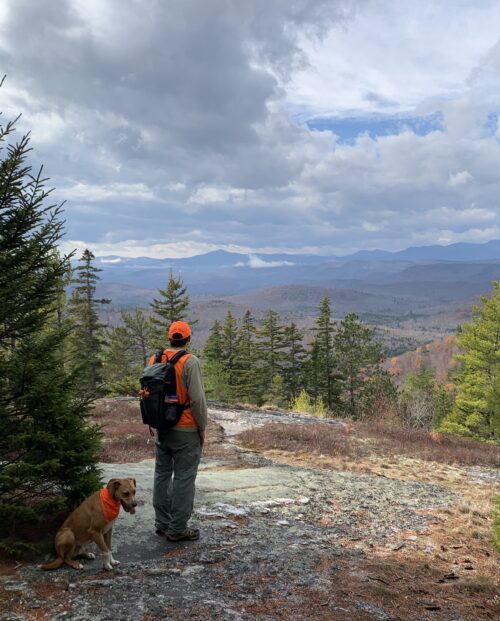
Discovering the Places Between
Like many hikers, Sam appreciates the iconic destinations that introduce people to the region. But some of his favorite places aren’t the ones that appear on postcards.
When asked to name a favorite hidden spot, he laughs… “Yeah… but I can’t talk about them.” Behind the joke is an understanding shared by many who know these mountains well. Some places become meaningful precisely because they remain quiet.
Still, Sam believes discovery should be shared responsibly. Rather than concentrating recreation at a handful of well-known destinations, he sees tremendous opportunity in helping visitors explore the many trails, waterfalls, ponds, and viewpoints that receive far less attention.
That idea inspired his work co-authoring the Scenic 7 hiking guide with Doug Dunlap, highlighting destinations that offer memorable experiences while helping spread recreation across the region.
One place he readily recommends is Saddleback Junior. Despite sitting along the Appalachian Trail and offering sweeping alpine views of the surrounding mountains, it receives only a fraction of the visitors found on neighboring 4,000-foot peaks.
“It’s one of the most beautiful mountains in the state,” he says. “Pretty much the only other people you see out there are thru-hikers.”
Mosher Hill Falls is another favorite, along with Jones Pond beneath the Bigelows and countless other places where visitors can experience the landscape at a quieter pace.
For Sam, these destinations represent something larger than simply finding a new hike. They help preserve the experience people come to the High Peaks seeking in the first place.
“We are a big region,” he says. “There’s a lot out there.”
Learning Through the Landscape
After graduating from college, Sam joined High Peaks Alliance as a Conservation and Recreation Technician, helping collect information for the State of the High Peaks Report.
His work took him across the region, documenting the condition of trails, campsites, picnic areas, waterfalls, and boat launches while helping build a clearer picture of recreation throughout the High Peaks.
“It was an awesome experience being able to go out there and see all these cool places and having that be my job.”
The work also offered something less tangible: opportunities to experience the landscape alongside people who knew it deeply.
One day, Executive Director Brent West led Sam on a bushwhack to the Middle and East Peaks of Mount Abraham. Unlike the mountain’s popular summit, these alpine ridges remain trailless, visited by relatively few people each year.
Standing beside an old stone cairn, Brent pulled out a photograph taken there more than fifty years earlier. Together, they recreated the image.
The moment stayed with Sam—not simply because of the mountain itself, but because it connected generations of people who had cared enough to find their way there.
Another memory comes from Caribou Pond. After descending from Spalding Mountain, Sam spent time sitting quietly beside the remote pond, surrounded by some of Maine’s highest peaks. “There was a moose on the other side of the pond,” he recalls. “It was totally quiet.”
Experiences like these continue to shape how he thinks about conservation. Protecting the High Peaks isn’t only about preserving land. It’s about preserving opportunities for moments of stillness, discovery, and connection that cannot be manufactured.
Working Together
If exploration defines Sam’s relationship with the landscape, collaboration defines his relationship with the community. He believes one of the High Peaks region’s greatest strengths is its willingness to work together.
Organizations with different missions—and sometimes different recreation interests—have found common ground through the High Peaks Initiative, sharing resources and expertise in ways that benefit the region as a whole.
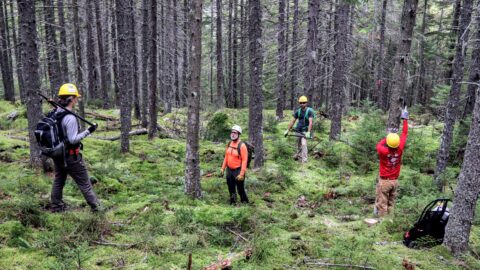
One example is the shared trail crew. For organizations like Maine Huts & Trails, having access to a professional crew makes projects possible that would otherwise be out of reach. “We wouldn’t be able to afford our own trail crew,” Sam says. “It’s great to have that shared resource.” He hopes the model continues to expand, allowing even more organizations to participate and accomplish more together.
To Sam, collaboration reflects something fundamental about the High Peaks. This is a region where hikers, paddlers, anglers, hunters, mountain bikers, ATV riders, and snowmobilers all share the same landscape.
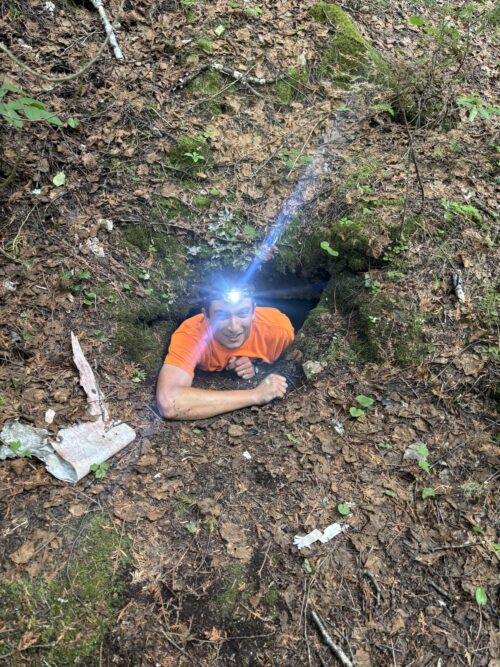
No single organization can care for it alone. “If we each work in silos and don’t communicate well with each other,” he says, “we’re not as strong as a whole.”
Passing It Forward
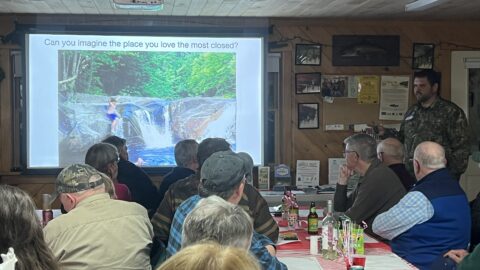
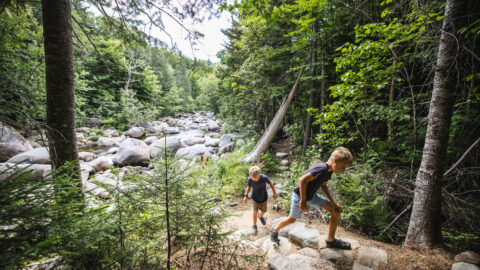
Today, Sam helps create first experiences in the outdoors for others through his work with Maine Huts & Trails. Each year, local schools and youth groups visit the huts, introducing students to forests, trails, and lakes that are often surprisingly close to home.
Some children arrive having spent years exploring the outdoors. Others have never visited places just beyond their own communities. “It’s really cool to see them experience their own backyard for the first time,” Sam says. Those moments remind him of his own early experiences discovering Maine. He hopes they also inspire future conservationists, outdoor educators, trail crews, and community leaders.
When asked what advice he would offer young people interested in outdoor recreation or conservation, his answer reflects the path that brought him here.
Take opportunities.
Meet people.
Volunteer.
Say yes.
“It’s all about making connections.”
Looking Ahead
When Sam imagines the future of the High Peaks, he hopes growth never comes at the expense of what makes the region special.
He hopes to see more permanent protection for important landscapes, continued investment in maintaining existing trails and recreation infrastructure, and greater recognition of the High Peaks as one of Maine’s defining outdoor destinations.
Just as importantly, he hopes visitors continue finding the quiet experiences that first inspired him: “I hope we’re still a region that isn’t experiencing overtourism.”
The High Peaks, he believes, should always remain a place where discovery feels possible; a place where there is another trail to explore; another conversation to have; another overlooked pond waiting beyond the trees.
Thank You, Sam
Sam’s story reminds us that conservation begins with curiosity. It grows through relationships, deepens through shared experiences, and continues when we invite others to discover the landscapes we love.
Whether documenting recreation for the State of the High Peaks Report, helping write the Scenic 7 guide, introducing students to the outdoors through Maine Huts & Trails, or encouraging visitors to explore responsibly, Sam has helped strengthen the connections that make this region unique.
Thank you, Sam, for sharing your story and for helping ensure that Maine’s High Peaks remain a place where there is always somewhere new to see.