Meet Tim Flight
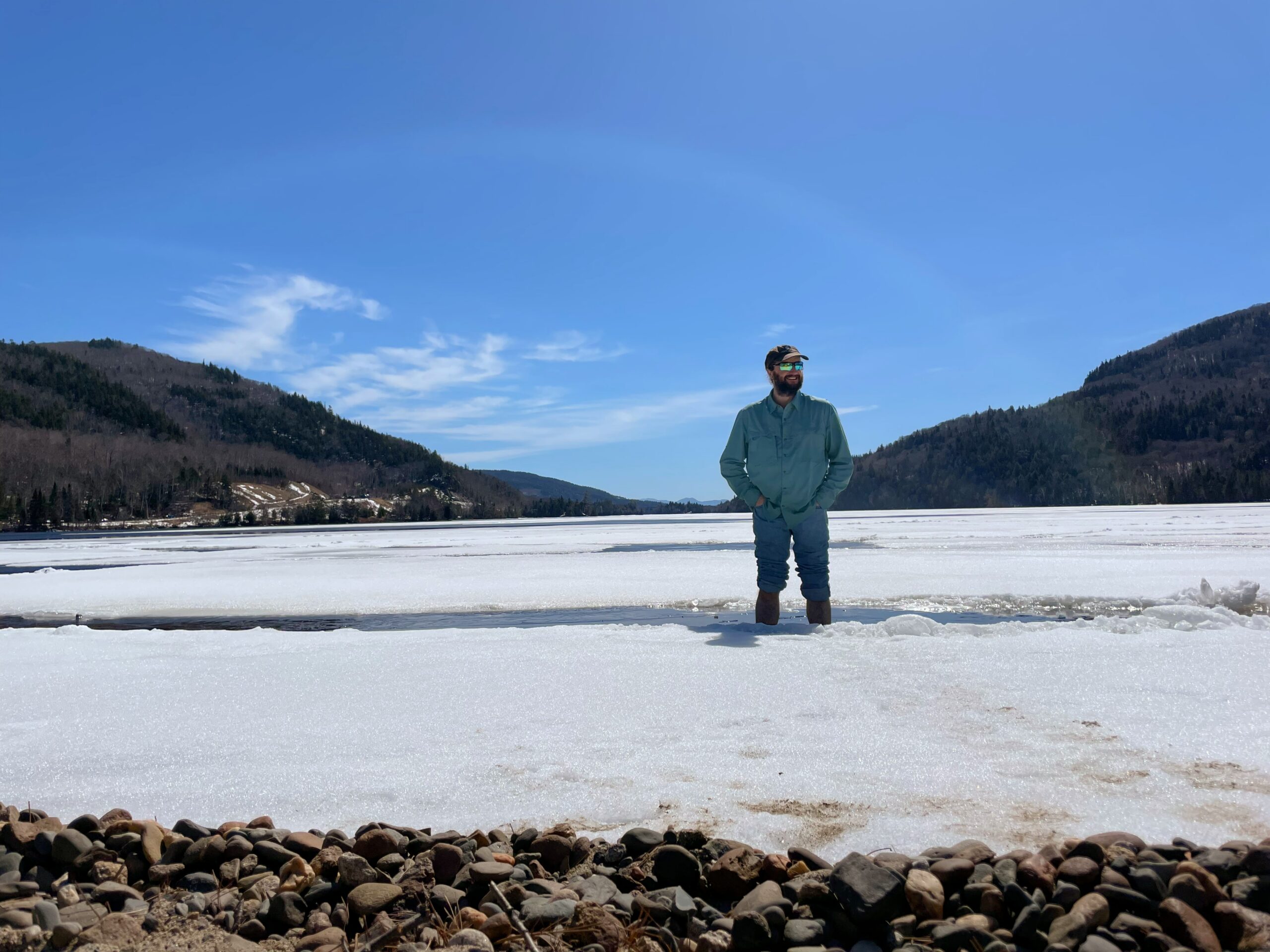
Tim Flight’s connection to the High Peaks began the way many lasting relationships do, through repeated visits that slowly became a way of life. Raised in Winthrop, he came north as a child for ski trips to Sugarloaf, then returned in summer for hiking and mountain biking. Over time, those visits deepened into something more permanent. In 1994, he first made the region his full-time home as a student at Carrabassett Valley Academy. Today, he still lives in Carrabassett with his wife, Anne.
Birding gave Tim a new way to understand the place he already loved. A high school ornithology unit, complete with 5 a.m. bird walks, changed the way he saw the natural world. “The more you understand something, the more you love it, and the more you want to protect it,” he said. That idea has stayed with him and continues to shape the way he thinks about birds and conservation in the High Peaks.
In this VOHP interview, we’ll follow how a childhood connection to the High Peaks became a lifelong home, and how birding helped Tim see the landscape with fresh eyes.

First Sighting
Tim remembers coming north to ski at Sugarloaf, then returning in summer to hike and bike, gradually building a connection to the landscape that would last into adulthood. One moment, though, became a turning point. During a mountain biking trip along what was then the rough, undeveloped Narrow Gauge Pathway, he saw an Indigo Bunting.
At the time, the sight stopped him in his tracks. “There’s birds that are that color that are not Blue Jays in Maine,” he remembers realizing. Blue jays were familiar and common. This bird was something else entirely, smaller, more delicate, and impossibly vivid against the Maine forest. That moment stayed with him, and it marked the beginning of a deeper appreciation for the birds around him.
Tim also traces part of his interest in birds to family. His grandmother was a backyard birder, and the family still has her field guide from 1977. It is a small detail, but one that speaks to how curiosity can move across generations. In Tim’s case, that early family interest, combined with the high school ornithology unit, helped shape a lifelong habit of paying attention.
Even now, Tim speaks about birds with the kind of enthusiasm that comes from long observation and genuine delight. “Dozens of bird species can be found in every habitat type around here,” he said, “they take on vastly different shapes, sizes, colors, and adaptations.” What began as an interest in identifying birds became a broader understanding of how the landscape works. The more he learned, the more he saw how birds, insects, fungi, forests, climate, and habitat are all connected.
That interconnectedness is part of why Tim sees birds as such powerful indicators of environmental health. “Birds everywhere are the ‘canary in the coalmine,’” he said. Watching certain species can reveal changes in lakes, forests, and insect populations long before those shifts become obvious to everyone else. Birds do not simply bring color and song to the landscape. They help tell the story of what is happening within it.
Tim especially enjoys the birds that call the High Peaks “home” only briefly. Many migrants arrive for a short season and take on extraordinary risks to get here. “In a way, I almost appreciate them more because they’re not ‘our birds’” he said. “They’re here for such a short window of time for such an important reason.” For him, that fleeting presence only adds to their value.
Nesting Grounds
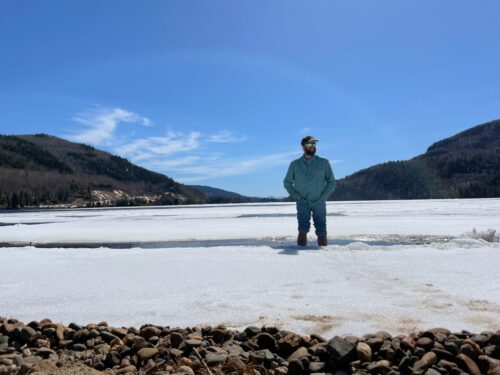
That sense of appreciation carries into his conservation work. As president of Western Maine Audubon, Tim is deeply involved in the Rangeley Birding Festival, a partnership with Maine Audubon that brings bird enthusiasts from across the country to the region each year. The festival celebrates the High Peaks as critical breeding territory during a brief but remarkable window, when warblers, thrushes, and other migrants fill the forests with song and movement. “The festival brings in visitors from across the country to see the amazing birds that call our region home,” Tim said. “Many of the species can be seen in other parts of the country, but only in a very short time window as they migrate through. But here they are perched and singing on their breeding territory.” In 2026, the Rangeley Birding Festival will feature walks at the Alliance’s Perham Stream Birding Trail.
For Tim, the festival is more than a celebration of birds. It is a bridge between curiosity and care. Guided walks, workshops, and presentations help visitors connect with the landscape in the same way his own first birding experiences once did. It also highlights the High Peaks’ role in the larger life cycles of species that travel thousands of miles, underscoring why local conservation matters far beyond the region itself.
Shared Habitat
He is also drawn to projects that support species under pressure, including aerial insectivores like cliff swallows. “All of our aerial insectivores are in serious decline right now,” he said. For Tim, conservation should be rooted in ecological need, not only in what is easiest to notice or most popular to support.
That perspective also shapes how he thinks about land conservation more broadly. “Conservation can mean so many different things,” he said. “Sometimes the primary goal should be the wildlife, sometimes it should be people.” He believes that flexibility is essential if the region is going to balance different needs well. Not every parcel should serve the same purpose, and not every successful outcome looks the same.
Tim is also clear-eyed about the role of forestry in the region. What looks undesirable at first glance can still be part of a healthy landscape if it is managed thoughtfully. That kind of perspective, he said, matters because people often assume conservation and active management are opposites when in practice they are often connected.
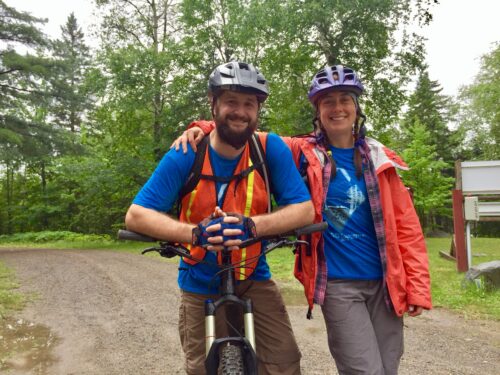
That is one reason Tim values the High Peaks Alliance. He appreciates the organization’s ability to bring people together across differences and around shared goals. “You’ve been able to get such diverse groups of people together surrounding a similar goal,” he said. In a time when so much public life feels divided, he sees something especially valuable in a coalition that can unite hikers, hunters, bikers, snowmobilers, landowners, birders, and conservationists. Tim and his wife Anne are longtime supporters of the Alliance, and they believe deeply in that kind of shared work.
For Tim, collaboration matters because conservation is rarely straightforward. He points to the recovery of waterfowl in North America, which was supported by both hunters and broader wetland protection efforts. “It takes all kinds of groups working together,” he said. That belief reflects a larger philosophy in his work. Strong conservation does not come from one constituency alone. It grows through trust, shared purpose, and the willingness to learn from unexpected partners.
Forest Bathing
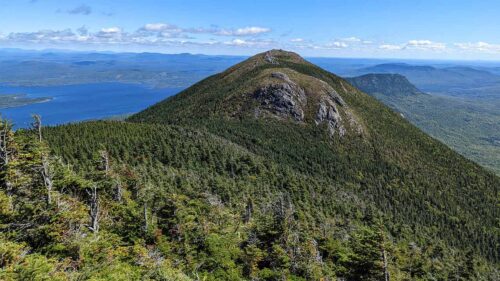
And yet, for all the science and strategy, some of Tim’s most powerful reflections are rooted in experience. He remembers a hike on Little Bigelow, where he reached a spruce-fir section below the krummholz zone and encountered a rare kind of stillness. “No wind. No airplanes. No red squirrels. No detectable sounds at all,” he said. He stopped the group and asked them to listen, not for a bird call, but for the absence of noise itself. “Do you know what I heard? Nothing.”
It is a moment that has stayed with him because it captured something hard to explain and even harder to replace. In that silence, he felt the value of intact natural places in a deeply personal way. Not only their beauty, but their calm, their perspective, and the sense of presence they can offer. “I finally understood the term forest bathing at that point,” he said.
When he thinks about legacy, Tim is modest. He says he would be “probably embarrassed and horrified if anything was named after me.” What he hopes instead is something quieter and more lasting. “I’ve just instilled information that people can use to make their immediate environments better. Better habitat for themselves, better habitat for the ecological communities around them, better habitats for their people that they love around them.”
Quiet Conservation
Tim Flight’s story shows how a love of place can grow into a lifelong commitment to stewardship. He is interested in helping others notice what matters, whether that is a bird in the canopy, a quiet moment on a mountainside, or the connections that hold a landscape together.
We all share this landscape and the responsibility that comes with it. What we learn to love, we are more likely to protect. Tim’s story is a reminder that conservation is built through attention, collaboration, and care, one relationship, one trail, and one observation at a time.